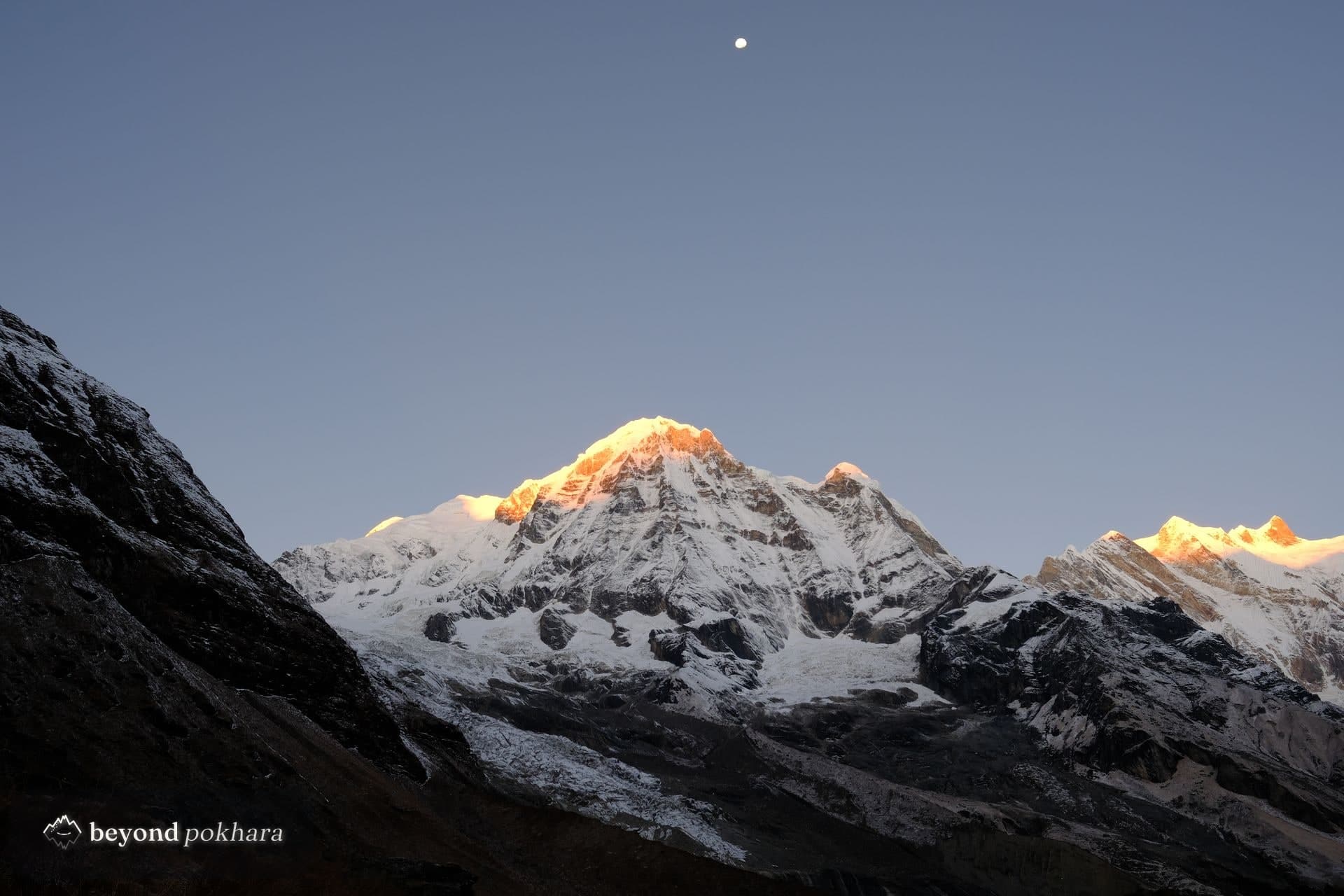
Mustang is the other side of the Himalaya, the dry, wind-carved country in the rain shadow behind the Annapurnas. The drive there from Pokhara follows the Kali Gandaki, which cuts one of the deepest gorges on the planet between Dhaulagiri and Annapurna.
This is a road trip, not a trek. You travel by road, you stop where you want, and you cover ground that would take weeks on foot. It is the easiest way to reach the old kingdom of Lo without walking for a fortnight.
Lower and Upper Mustang
There are two Mustangs to understand. Lower Mustang, up to Kagbeni and Muktinath, is open to anyone with the standard Annapurna permit. Upper Mustang, north toward Lo Manthang, is a restricted area that needs a special permit and a registered guide.
If you want the walled capital and the cave country, you are going to Upper Mustang, and that changes the planning and the budget.
The route, stage by stage
The trip runs up the Kali Gandaki in stages rather than one long haul. The first day is the long drive from Pokhara to Jomsom, the staging town at 2,720 metres. A short run the next day reaches Kagbeni, the medieval village where the restricted area begins. From there the road climbs north through Chele and Samar to the red-cliffed village of Ghami, then past the long mani wall and the cave country of Dhakmar to Lo Manthang at 3,840 metres. A full day inside the walls covers the old royal palace, the great gompas, and the cave monasteries of Chhoser before you turn south and retrace the gorge to Jomsom and Pokhara. A morning flight from Jomsom can replace the final drive if you would rather save the day.
Permits
Upper Mustang requires a restricted-area permit, currently 500 US dollars per person for ten days, plus the Annapurna Conservation Area Permit. You cannot get the restricted permit as a solo traveller. You need to be with a registered agency and a guide, and we handle the paperwork end to end. Lower Mustang needs only the standard conservation permit, which is simpler to arrange.
How many days
For Upper Mustang, plan on eight days return from Pokhara. That gives you the drive up the gorge, a full day at Lo Manthang, and the side valleys, without rushing the altitude. Lower Mustang alone, to Kagbeni and Muktinath, can be done in four to five days.
Best time to go
Mustang sits in the rain shadow, so it is one of the few places in Nepal you can travel through the monsoon. The classic windows are still spring and autumn, but summer works here when the rest of the country is under cloud. Winter is cold and some lodges close, so spring through autumn is the dependable stretch.
The vehicle you need
The roads up the Kali Gandaki are unpaved, steep, and slow, which is exactly why the vehicle matters. A genuine 4WD jeep with a driver who knows the gorge is the right and safe choice. Ordinary cars and vans do not belong on this road. Our Pokhara to Mustang route page has the detail on the drive, and the trip runs in our own jeeps with a mountain driver.
What it costs
The eight-day Upper Mustang jeep tour starts from around 1,099 US dollars per person, which reflects the restricted permit, the jeep and driver, and lodges along the way. The restricted permit alone is a fixed cost of 500 US dollars for ten days, so Upper Mustang is never a budget trip. Lower Mustang, without the restricted permit, comes in a good deal cheaper.
What the drive is like
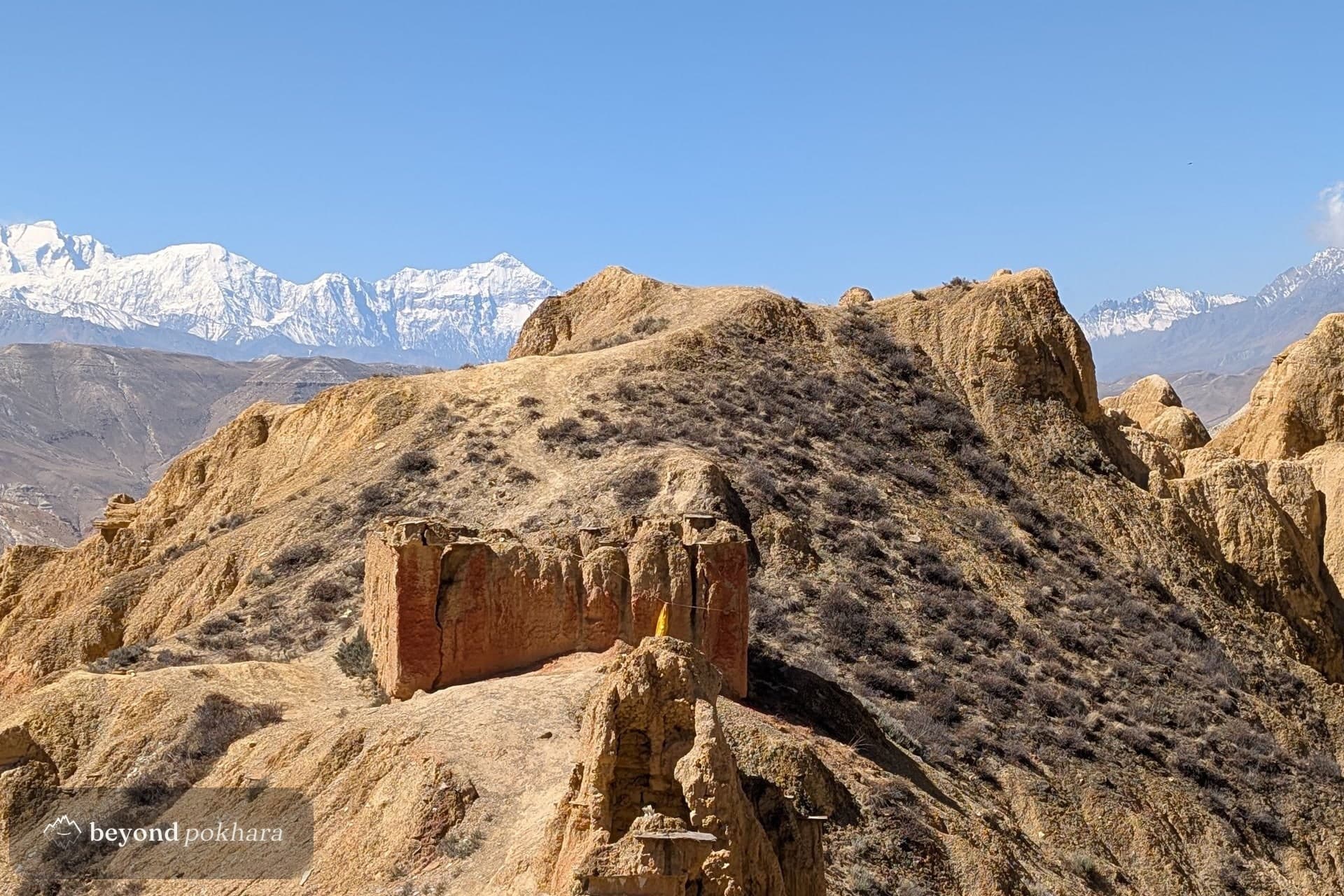
The lower section is rough and dramatic, following the river through the gorge. Higher up the land opens into ochre cliffs, eroded badlands, and villages that look carved out of the hillside. The roads are unpaved and slow, so days are measured in hours behind the wheel rather than distance. That pace is part of the point. You are crossing the Himalaya by road into country that feels closer to Tibet than to the green hills around Pokhara.