Most people treat Pokhara as a staging post, a night before a trek or a night after. Give it two full days and it stands on its own. Here is how we would spend them, built around light and timing rather than ticking off a list.
Day one
Sunrise at Sarangkot
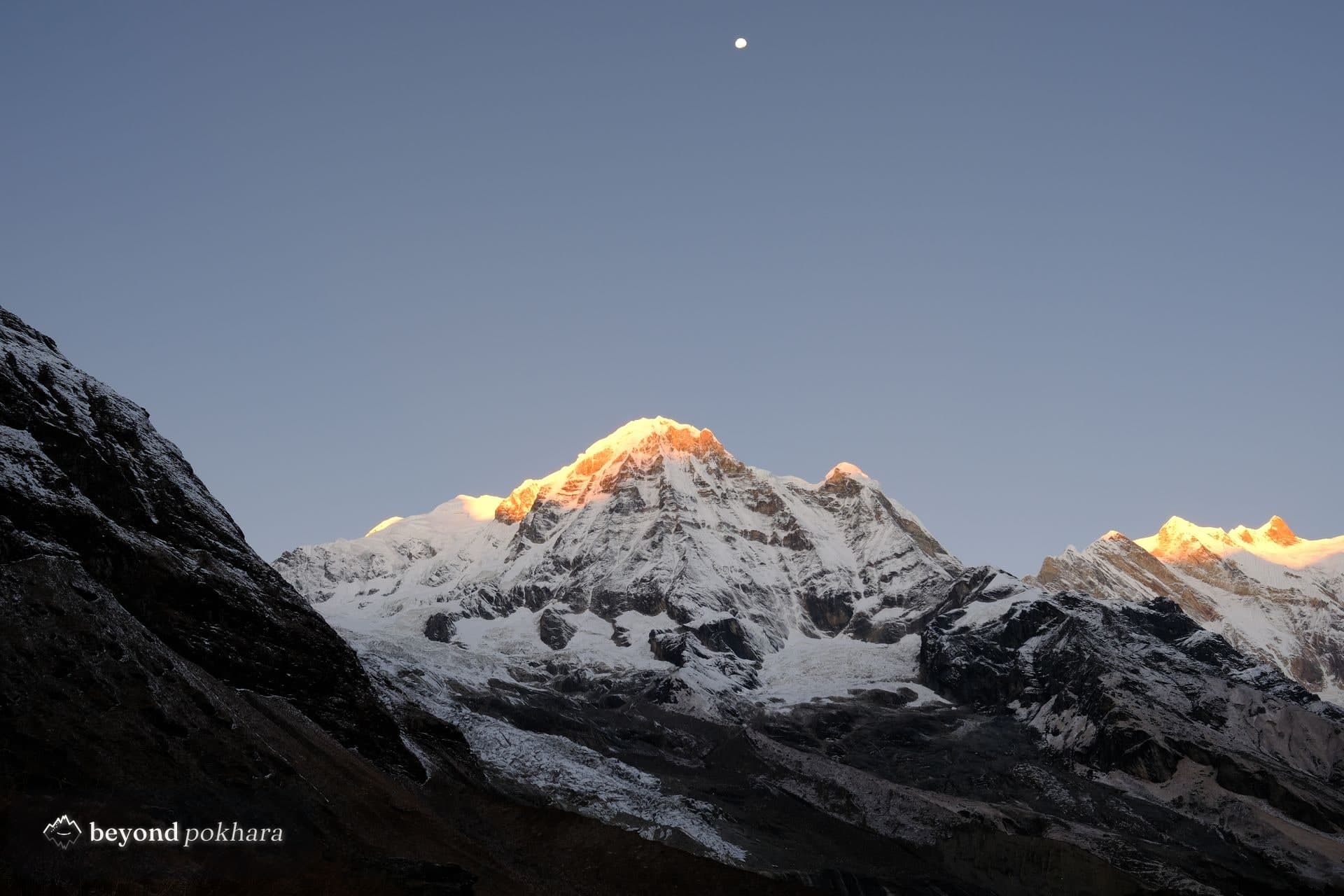
Start before dawn with the drive up to Sarangkot. The ridge looks east across the valley to the whole Annapurna skyline, and on a clear morning the range turns gold while the town is still in shadow. Come back down for breakfast.
Phewa Lake and the Peace Pagoda
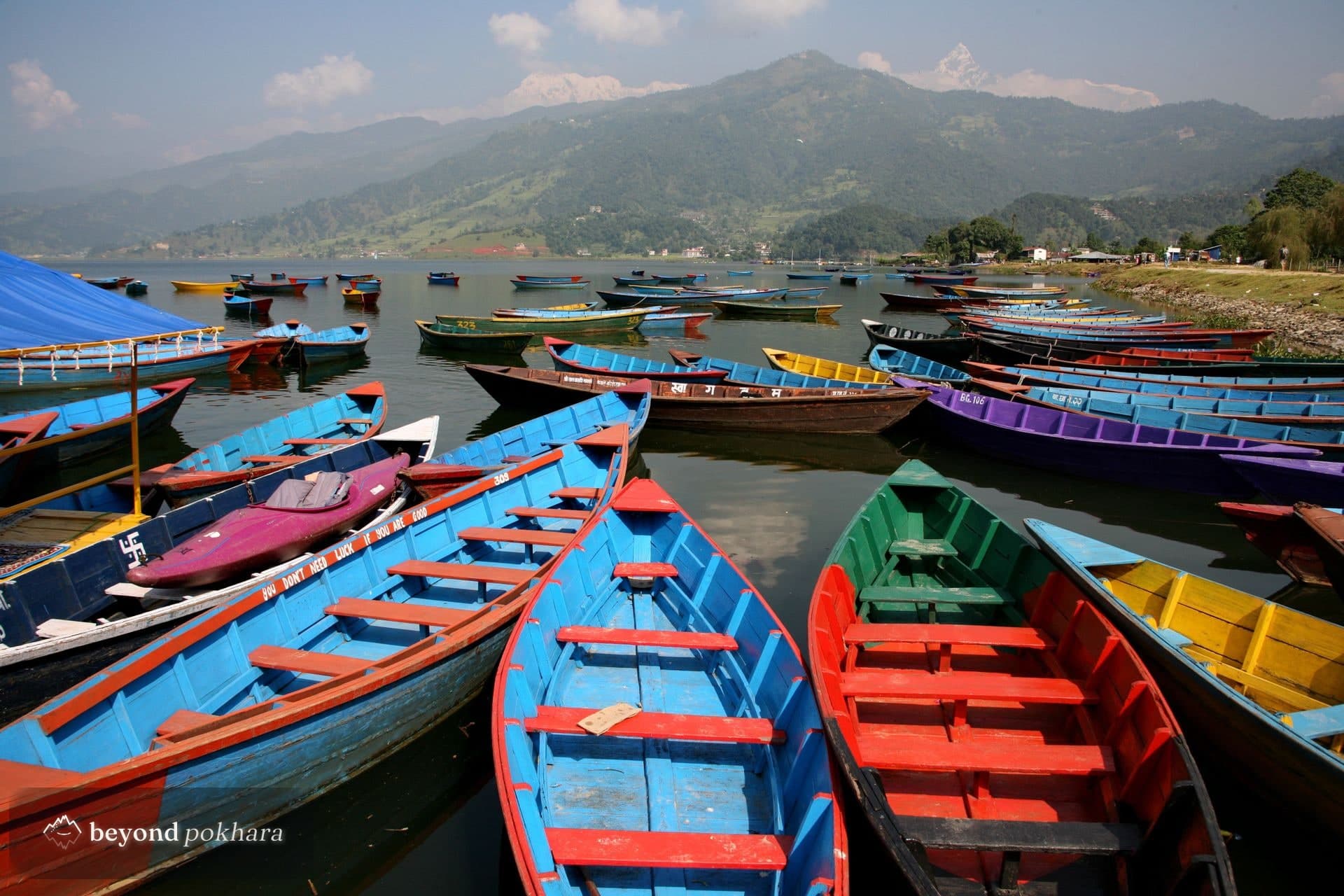
Mid-morning, take a wooden boat across Phewa Lake to the far shore, then walk up through the forest to the World Peace Pagoda. The climb is short and the view back over the lake and the city is the best in town.
The afternoon, slowly
Spend the afternoon along the lake. Lakeside is touristy but pleasant in the quieter stretches, and the light on the water in the late afternoon is worth sitting still for.
Day two
Begnas Lake
Drive east to Begnas, the quieter of the valley's lakes. There are no boats full of day-trippers here, just water, hills, and a few fishing canoes. It is the Pokhara people forget exists.
The caves
On the way back, stop at the limestone caves on the edge of town, Bat Cave and Mahendra Cave. They are short visits but a good contrast to the days spent looking at mountains.
Old Pokhara
Finish in the old bazaar, away from the lake, where the city is still a working Nepali town rather than a tourist strip. It is a quiet way to close two days.
Getting around
The sights are spread across the valley, so the two days work best with a driver rather than a string of taxis. Sarangkot before dawn, Begnas out east, and the caves on the edge of town are all a short drive apart, and a car with a driver links them without wasted time. If you would rather have it arranged end to end, our Pokhara sightseeing day tour covers the same ground in a single planned day.
Best time to visit
October to April gives the clearest mountain views, and the two sunrises are the reason to come, so the dry season is worth aiming for. The monsoon from June to September turns the valley green but sits cloud on the peaks most mornings. Even then the lakes and the town are pleasant, but Sarangkot can be a gamble.
If you have a spare morning
Pokhara is one of the best places in the world to paraglide, with tandem flights launching off Sarangkot and landing by the lake. It takes half a morning and needs no experience, which makes it the easy thing to add if you find a third day. A short hike up to the World Peace Pagoda from the town side, or out to the Australian Camp ridge, is the quieter alternative. With a full day to spare, you can drive half an hour southeast of Lakeside to Nirmal Pokhari, terraced farm country where you walk the field paths and eat lunch with a farming family.
A note on pace
You can cram more in. We would not. Pokhara rewards going slowly, and the two sunrises are the things you will remember, not the number of stops.
FAQ
Is two days enough for Pokhara?
Two days covers the essentials well: a Sarangkot sunrise, Phewa Lake and the Peace Pagoda, Begnas, and the caves. A third day lets you add paragliding or a short hike.
What is the best time to visit Pokhara?
October to April for the clearest mountain views. The monsoon from June to September is green but often cloudy over the peaks.
How do you get around Pokhara?
Most sights are a short drive apart. A private car or a day tour with a driver is the easy way to link Sarangkot, the lake, and Begnas without losing time to taxis.
Can you paraglide in Pokhara?
Yes. Pokhara is one of the best paragliding spots in the world, with tandem flights off Sarangkot landing by the lake. It fits neatly into a spare morning.