Poon Hill is the trek that introduced a lot of people to the Himalaya. It is short, the trails are good, the villages are welcoming, and the sunrise from the top is one of the best in the country. That popularity means it is not the quietest route, but it earns its reputation, and it is the trek we most often suggest for a first walk in the Annapurnas.
Where it goes
The standard loop runs from Nayapul through Tikhedhunga up to Ghorepani, with the dawn climb to the Poon Hill viewpoint at 3,210 metres, then down through Tadapani and the large Gurung village of Ghandruk before the drive back to Pokhara. Over four days you cover roughly 40 kilometres, most of it on well-built stone trail through rhododendron forest and terraced farmland. Nothing is remote. There are teahouses at every stage and a hot meal at the end of each day.
Getting there from Pokhara
The trailhead at Nayapul is about a two-hour drive from Pokhara, and the loop comes out on the Ghandruk road for the drive back. We arrange the transport both ways so you are not haggling for a jeep at either end. If you want to see how the road connects, our car rental in Pokhara and vehicle hire pages cover the options, though on the trek itself the transfers are already part of the trip.
Best time to go
October to November and March to April are the prime windows. Autumn is clearest, and spring brings the rhododendron forests into bloom, which along this route is a real reason to go. Winter is doable with cold mornings and the odd dusting of snow at Ghorepani. Skip the monsoon from June to September if the view is the point, since cloud sits on the peaks most mornings.
How hard is it
Moderate. The stone staircase up to Ulleri is a long grind, gaining over 1,300 metres on the second day, and the pre-dawn start for the viewpoint is cold. There is no altitude problem at these heights, the highest point is 3,210 metres, and the days are not especially long. It suits a reasonably fit first-time trekker who is happy to walk five to seven hours with a day pack. Trekking poles help on the long descent through Ghandruk, which is harder on the knees than the climb up.
How many days
Four days is the standard loop, and the one we run most. Walkers short on time can do it in three with a higher drive-in and a longer second day. Families or anyone wanting a slower pace can stretch it to five with an extra night at Tadapani or Ghandruk. All three shapes reach the same Poon Hill sunrise. The difference is how long you spend on the descent.
Permits you need
Two permits cover the route. Since April 2023 a licensed guide is also required for trekking in the Annapurna Conservation Area, so a guide is part of any Poon Hill trip now. The ACAP entry permit is NPR 3,000, about 22 US dollars, and the TIMS card is NPR 2,000, about 15 US dollars per person. We arrange both before you reach the trail, which avoids the doubled fee charged at the check post if you arrive without them.
What it costs
Guided, from around 299 US dollars per person including the guide, both permits, transport to and from the trailhead, and teahouse nights. It is one of the more affordable treks from Pokhara, which is part of why it stays popular. The exact figure depends on group size and season, since a larger group shares the guide and transport and the per-person price comes down. The full Ghorepani Poon Hill trek page lists what is included.
What to pack
You do not need mountaineering kit. Broken-in walking shoes, a warm layer and a windproof for the cold viewpoint mornings, a head torch for the pre-dawn climb, and a light day pack are the essentials. Teahouses sell water, snacks, and basics along the way, so you can carry light. Nights at Ghorepani are cold from November onward, so a warmer layer earns its place in the bag.
The sunrise
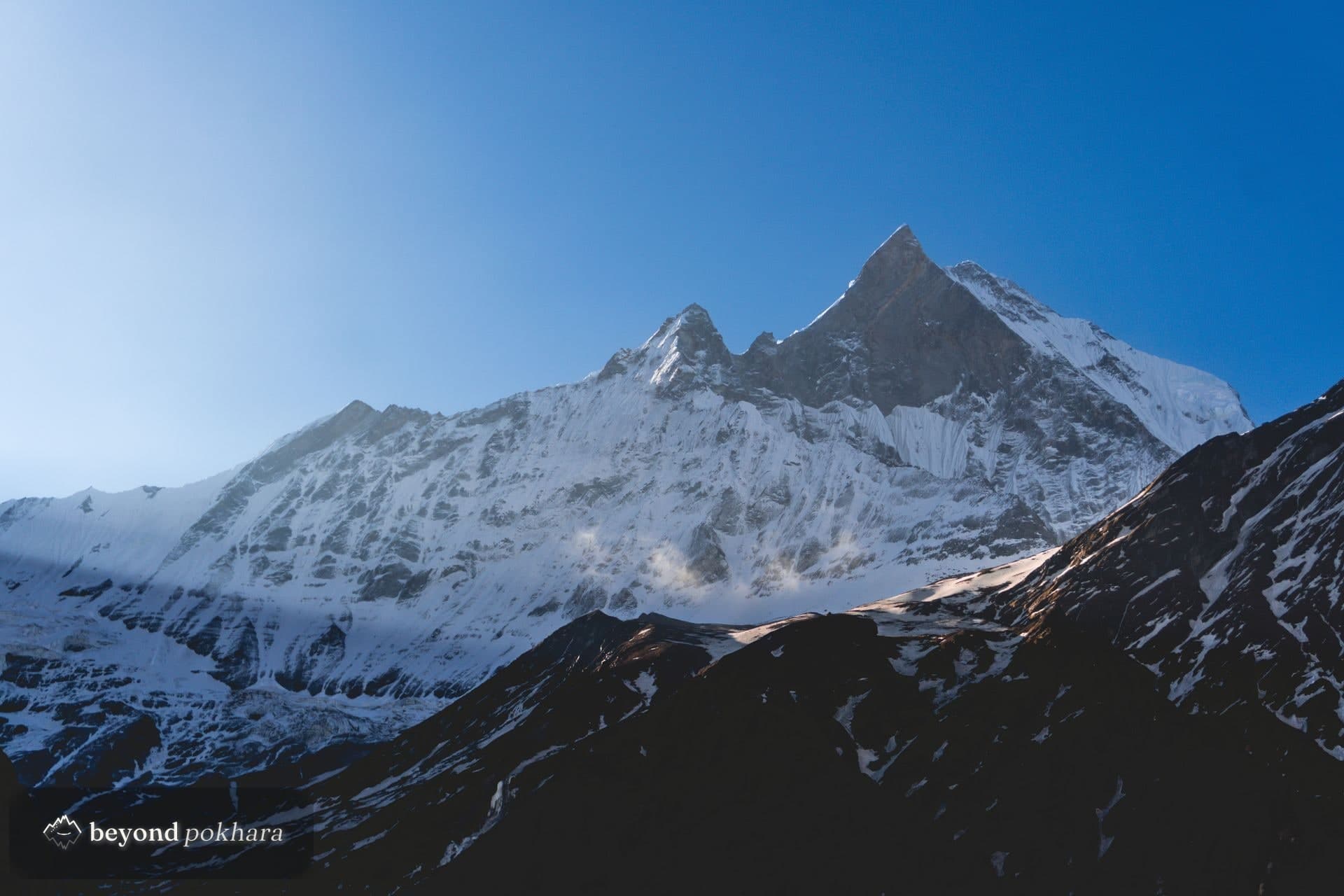
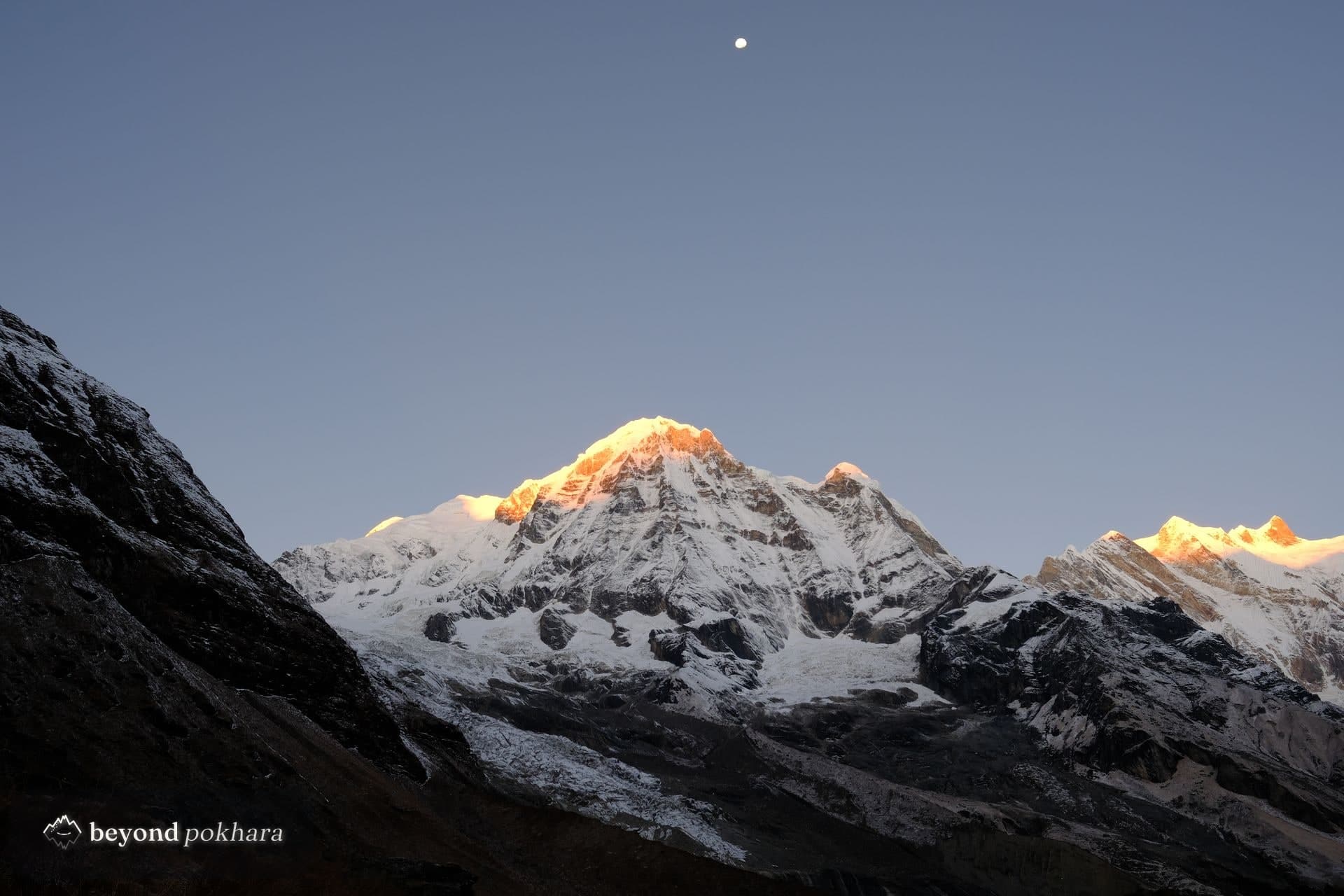
You leave Ghorepani in the dark and climb about forty-five minutes to the top. When it works, the sun comes up behind you and lights Dhaulagiri, then the Annapurnas, one peak at a time. Bring a warm layer and a torch. Then come down for breakfast.
Combining it with a longer trek
Poon Hill sits at the front of the Annapurna foothills, so it links naturally to longer routes. Many walkers add it to the start of the Annapurna Base Camp trek for a nine to ten day loop that eases the altitude, or pair it with the quieter Mardi Himal trek on the ridge to the east. Either version turns a short introduction into a fuller trip without leaving the region.