A Pokhara sightseeing day tour covers the best of the valley in a single well timed day: sunrise over the Annapurnas from Sarangkot, a boat across Phewa Lake, the Peace Pagoda on the south ridge, and the falls and caves on the edge of town. This guide walks through each stop, what it costs, the entry fees you pay on the day, and when to come for the clearest views.
What a Pokhara sightseeing day tour covers
The valley is small, so a day is enough to see the sights without feeling rushed, as long as you start before dawn. The order here follows the light. Sarangkot comes first because the sunrise is the reason to be up early, and the rest of the day fills in from there.
Sarangkot at sunrise
The day starts in the dark with the drive up to Sarangkot, a ridge about five kilometres from Lakeside that sits high enough to look straight across the valley at the mountains. On a clear morning the first light hits Dhaulagiri, the Annapurna massif, and the fishtail peak of Machapuchare while the town below is still in shadow. You want to be in position before the sun rather than arriving with it. Entry to the viewpoint is NPR 200. After the sun is up you drop back down to the hotel for breakfast, which resets the day.
Phewa Lake and Tal Barahi
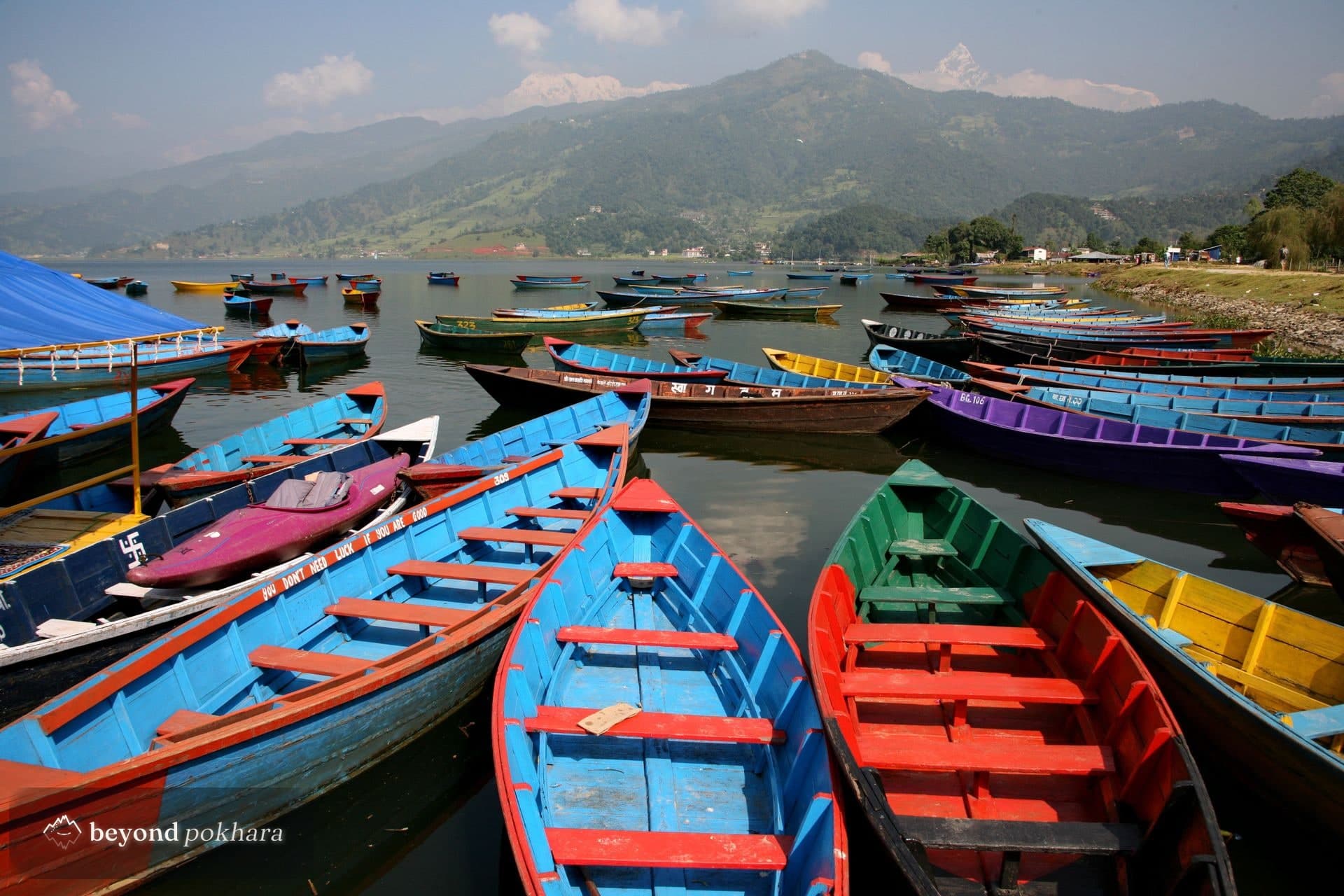
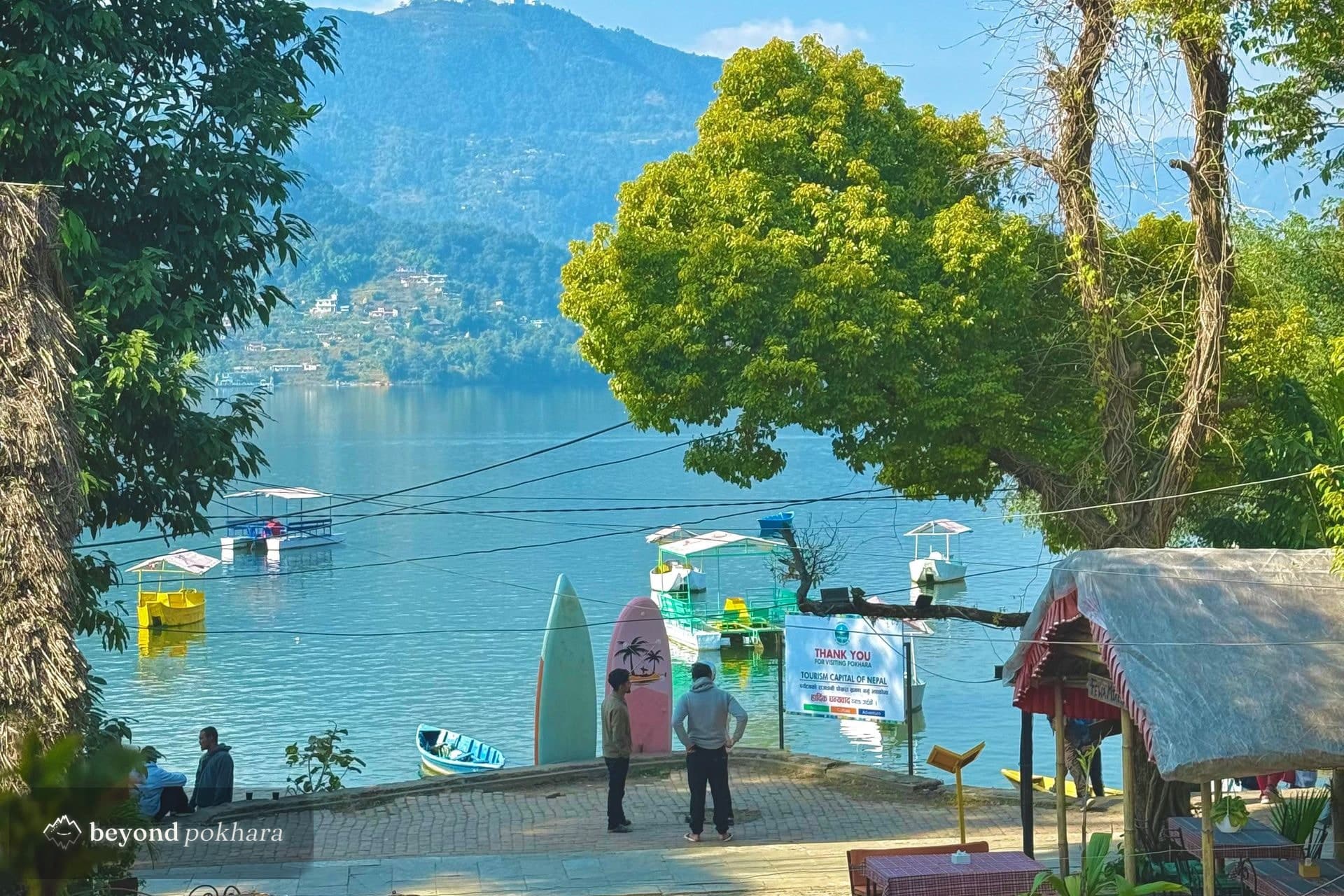
Mid morning, a hand rowed wooden boat takes you across Phewa Lake to Tal Barahi, the small island temple near the middle of the water. It is a short crossing and a good way to see the town from the lake rather than the road. A boat across and back runs a few US dollars, and you can add time along the quieter stretches of the lakeshore if you are not in a hurry.
The World Peace Pagoda
From the lake it is a short climb, or a drive around, to the World Peace Pagoda on the south ridge. The white stupa looks north over the whole valley, with the lake below and the Annapurnas behind it on a clear day. Admission is free, and it is one of the few stops where you will want to slow down and sit for a while. If you reach it on foot from the far shore of Phewa, the walk up through the forest takes about forty five minutes.
Davis Falls and Gupteshwor Cave
In the afternoon you cross to the other side of town for Davis Falls, where the Pardi Khola drops into a gorge and vanishes underground. It is a modest waterfall in the dry months and a loud one in the monsoon, when the river tears through the rock. Entry is NPR 200 for foreign visitors. Across the road, Gupteshwor Cave runs down into the limestone to a shrine and a view back out at the base of the falls, for another NPR 100 to 200. The two sit together, so they are one stop rather than two.
The old bazaar
The day usually ends away from the tourist strip, in the old town around Bindhyabasini temple. The Newari shopfronts and the working streets are a quieter close after a day of viewpoints, and they show a side of the city the Lakeside does not. If you would rather add the International Mountain Museum instead, it fits here too, with a NPR 500 entry.
For the full stop by stop version with timings, our Pokhara sightseeing day tour runs this exact round door to door from your hotel.
What a Pokhara sightseeing day tour costs
Prices in Pokhara vary with how you put the day together. A private car and driver for the day starts around 50 US dollars, and adding a guide on top is roughly 30 US dollars. A fully arranged guided day tour that bundles the vehicle, driver, and pickup starts from about 49 US dollars per person and rises in a smaller group, where the fixed vehicle cost is shared over fewer people. Full service tours that include a guide throughout and lunch tend to sit in the 60 to 125 US dollars per person range.
Entry fees are almost always separate from the tour price. Budget another 15 to 20 US dollars per person to cover Sarangkot, the boat, Davis Falls, and Gupteshwor, with the Mountain Museum on top if you add it. The Peace Pagoda is free. Lunch is usually on you as well, which is worth knowing so the headline price does not surprise you later.
If it is only the driving you need and you would rather set your own pace, a car rental in Pokhara with a driver is the cheaper route, and you buy your own entry tickets as you go.
Entry fees and permits
You do not need a trekking permit for a valley day tour, since none of the standard stops sit inside a conservation area. What you pay are the individual entry fees on the day:
- Sarangkot viewpoint: NPR 200
- Boat across Phewa to Tal Barahi and back: roughly NPR 400 to 1,000
- Davis Falls: NPR 200 for foreign visitors
- Gupteshwor Cave: NPR 100 to 200
- World Peace Pagoda: free
- International Mountain Museum: NPR 500 (optional)
Pokhara also charges a small tourism entry fee of around NPR 200 at the main checkpoints, which some tours fold into the price and others leave to you. Carry enough small notes in rupees, as the ticket desks at the sights rarely take cards.
Best time for a Pokhara sightseeing day tour
October to April is the season for clear mountain views. Through those months the air is dry and the Sarangkot sunrise is at its most reliable, which matters because the sunrise is the part of the day people remember. December and January mornings are cold on the ridge, so a warm layer is worth packing even when the afternoons are mild.
The monsoon from June to September turns the valley deep green and thins out the crowds, and Davis Falls is at its most dramatic with the river in full flow. The trade off is cloud, which often sits on the peaks at dawn and hides the range from Sarangkot. If you travel in the monsoon, keep the itinerary flexible so you can chase a clear morning rather than lock in a fixed sunrise slot.
How to get around Pokhara
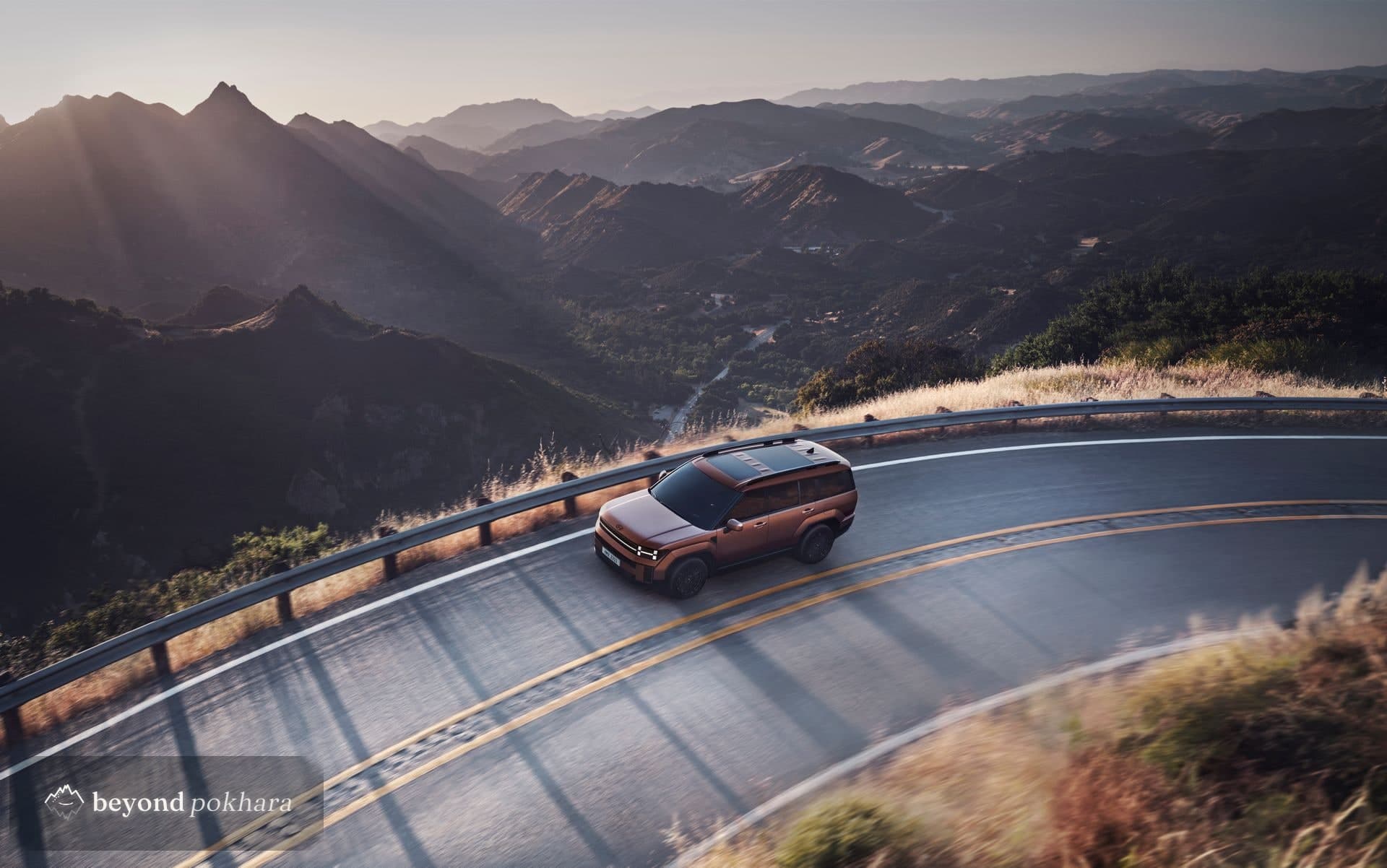
The sights are spread across the valley, from Sarangkot in the northwest to Davis Falls in the south, so the day works best with a vehicle and driver rather than a string of taxis. A driver who knows the timing can have you on the ridge before the sun and at the falls before the afternoon buses arrive, which is the difference between a smooth day and a stop start one.
Most travellers either book the day as a guided tour or hire a car with a driver and run their own route. Either way the vehicle picks you up at your hotel and returns you there, so you are not working out local transport between stops. For how the wider options compare, our guide to car rental in Pokhara covers the vehicle side, and two days in Pokhara shows how to stretch the same sights over a slower pair of days if one feels tight. When you are ready to see the whole range of Pokhara tours, the day tour is the natural first day of almost any trip.
FAQ
How much does a Pokhara sightseeing day tour cost?
A private car and driver for the day starts around 50 US dollars, and a guided day tour that includes the driver runs from about 49 US dollars per person, more in a small group. Entry fees to the sights add roughly 15 to 20 US dollars on top.
What does a Pokhara sightseeing day tour include?
The usual round is Sarangkot at sunrise, a boat on Phewa Lake to Tal Barahi temple, the World Peace Pagoda, Davis Falls and Gupteshwor Cave, and the old bazaar. Most tours cover a private vehicle, driver, and pickup from your hotel. Entry fees and lunch are usually separate.
Is one day enough to see Pokhara?
One day covers the main sights comfortably if you start early. If you want to add Begnas Lake, paragliding, or the caves on the edge of town, a second day gives you room without rushing.
What is the best time for a Pokhara sightseeing day tour?
October to April gives the clearest mountain views from Sarangkot. The monsoon from June to September is green and quieter, and Davis Falls is at its most powerful then, but the peaks are often behind cloud at sunrise.