A Sarangkot sunrise tour is the earliest start you will make in Pokhara and usually the one people talk about afterwards. Pickup is around 5 am, the drive up takes 25 to 40 minutes, and you are standing on the ridge at 1,592 m before the sky lightens. Most travellers are back at their hotel for breakfast by 8.
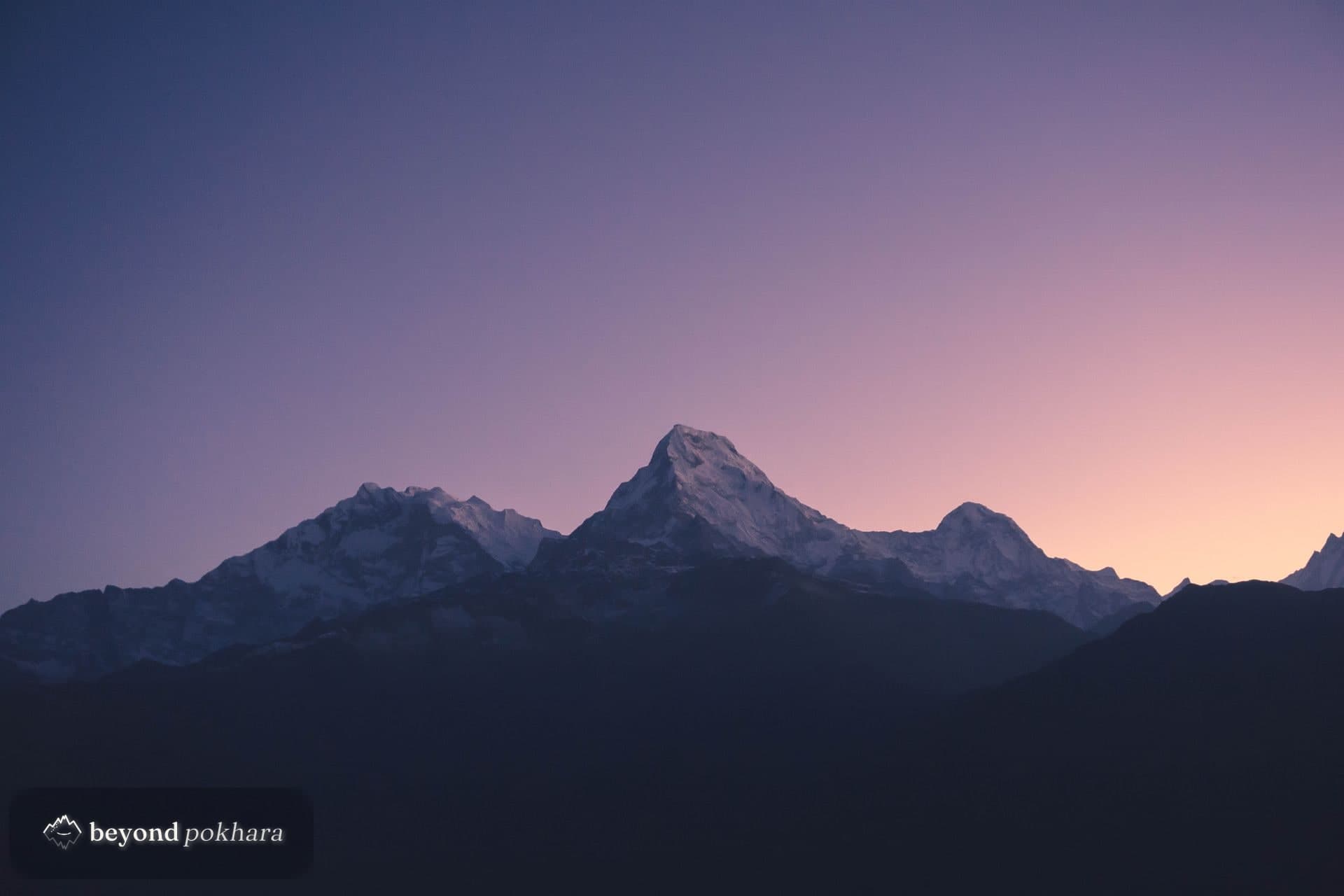
Sarangkot sits about 8 km northwest of Lakeside on a ridge that faces the Annapurnas square on, which is the whole reason it works. From one spot you get Dhaulagiri at 8,167 m to the west, Annapurna South and Annapurna I at 8,091 m, Machapuchare at 6,993 m in front of the range, and on a clean morning Manaslu at 8,163 m off to the east. Machapuchare has never been opened for climbing in Nepal, so the summit you are looking at has no route up it.
What the sunrise actually looks like
The colour arrives before the sun does. Twenty to thirty minutes ahead of sunrise at ridge level, the highest snow picks up a red that turns orange and then washes out to ordinary daylight. Machapuchare tends to go first because of where it stands. Turn up at the official sunrise time and you have missed the part worth watching.
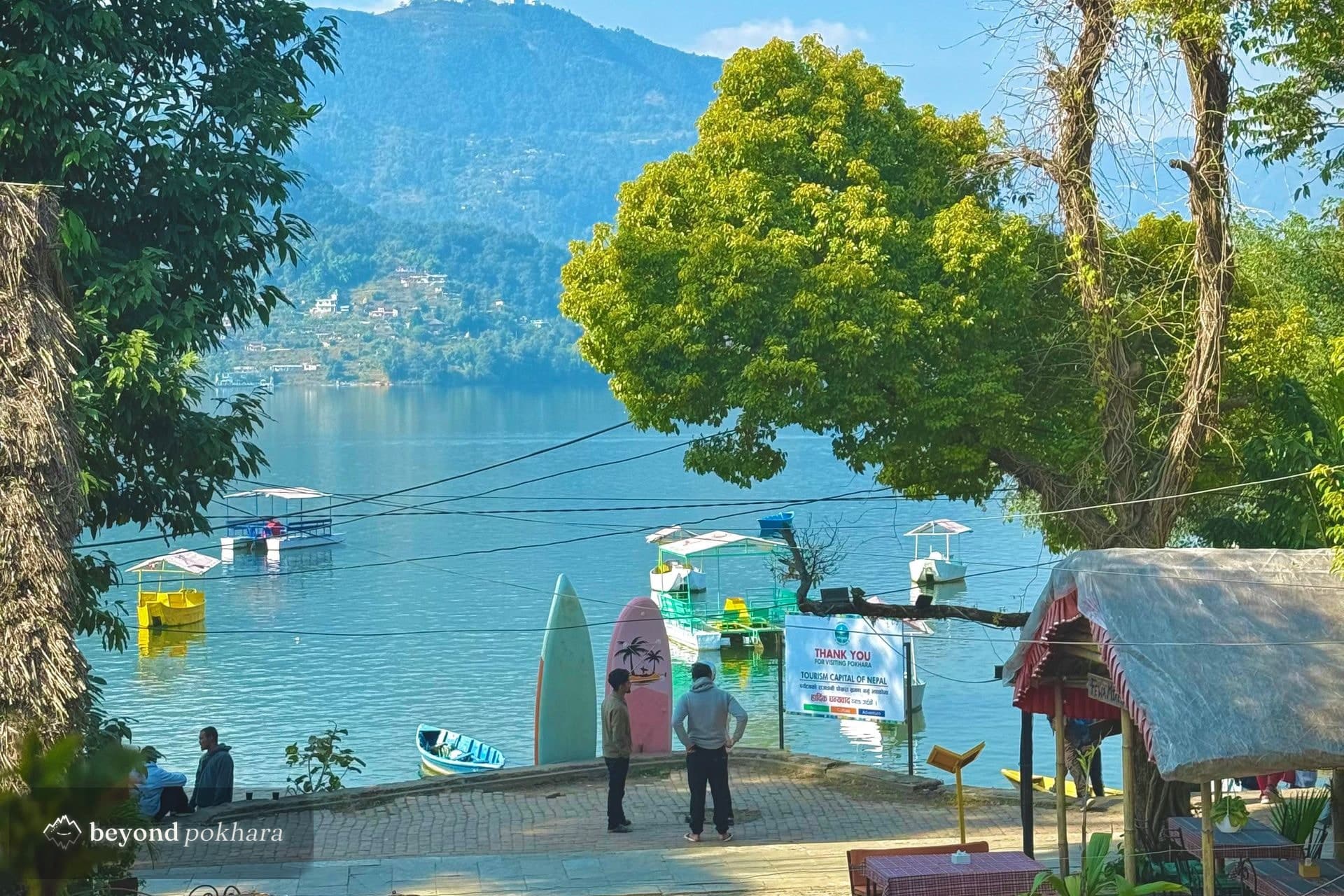
Below you, the valley is often filled with cloud. Phewa Lake sits somewhere inside it and shows up later as the layer burns off. The ridge sits 800 m above the lake and more than 5,000 m below the summits, so you look down at Pokhara and up at the snow in the same turn of the head. No other viewpoint near town gives you both at once.
What time to leave Pokhara
Sunrise here shifts by more than an hour and a half across the year, so a fixed departure time is no use. Working figures for the ridge:
- Late December and January: sun up near 6:50, leave Lakeside by 5:45
- February and March: near 6:20, leave by 5:15
- April and May: near 5:50, leave by 4:45
- June to September: near 5:15, leave by 4:15, and expect cloud
- October and November: near 6:05, leave by 5:00
Add ten minutes on top for the short walk from where vehicles stop to the view tower. Our Sarangkot sunrise tour quotes "around 5 am" and then moves the pickup with the season, which is what you want rather than a time printed once and never adjusted.
What a Sarangkot sunrise tour costs
Prices for this particular morning sit in a narrow band, and the difference between them is mostly about who handles the waiting driver.
- Our Sarangkot sunrise tour starts at 29 US dollars per person and includes a private vehicle, a driver, a guide, and hotel pickup in Pokhara.
- A taxi you negotiate yourself the night before runs roughly 1,000 to 2,000 rupees for the return trip with the wait at the top. Ride apps quote at the low end of that. Agencies along the strip quote higher.
- The viewpoint fee is 60 rupees per person, paid at the tower, and no tour price includes it.
- A day of car rental in Pokhara starts at 45 US dollars for a private car with a driver. That is the one to book if you plan to carry on after breakfast instead of going back to bed.
The cheapest option is not always the sensible one at 5 am. A street taxi taken with no clear agreement about waiting is how people end up on the ridge at 7 o'clock trying to find a ride down.
The ways up: road, cable car, on foot
By road is standard. It is 8 to 10 km of tarmac from Lakeside that turns tight and steep in the last stretch. Reckon on 25 minutes when the road is empty and 40 when it is being repaired, which happens often enough to matter. Any car manages it dry. After heavy rain, drivers want higher clearance.
The Annapurna Cable Car has run since February 2022 between Khapaudi, out along the Phewa Lake road past Pame, and the Sarangkot ridge. Foreign visitors pay around 8 US dollars one way or 12 return, and the first cabins go at 5 am, so sunrise is possible on it. Hours and fares have changed more than once since it opened, so check on the day. You still need a vehicle to reach the bottom station, which is why it works better as a way down than a way up.
On foot from the lake is 11 km with about 800 m of climb, three to five hours, and nobody does that in the dark. The version worth doing runs the other way: drive up for first light, then walk down through terraced fields and villages to the lake road in two to three hours. If you want the long ridge instead of the descent, the Sarangkot to Naudanda hike keeps going west past the old Kaskikot fort site for a full day of walking, 14 km with the range in view most of the way, from 49 US dollars.
Best time of year for a Sarangkot sunrise
October to April is the season, and October into November is as sharp as it gets. The air after monsoon has nothing suspended in it and the range reads as a hard edge against the sky. December and January mornings are just as clear and genuinely cold up there, close to freezing with wind, and the sun takes its time reaching the ridge once it is up.
Spring holds up into March, then haze builds as fields are burned and dust lifts off the plains to the south. By late April the peaks are often a pale outline rather than the clean silhouette you came for. It is the same haze that makes autumn the busier season for trekking in Nepal, even though spring is warmer and has the rhododendrons.
Monsoon, June to September, is a gamble worth taking if you are already here. On the good mornings the cloud sits below the ridge and you look out across a white sea with the summits standing clear above it, which beats anything the dry season produces. On the ordinary mornings you see grey. Keep the plan loose and go on the morning the sky looks right rather than committing three days out.
What to bring at 5 am
- Warm layers, more than the daytime temperature suggests. Pokhara at 800 m in December is mild. The ridge at 1,592 m before dawn is not.
- Cash in small notes for the viewpoint fee and tea at the top.
- A head torch if you plan to walk down, or if you would rather not pick your way to the tower by phone light.
- Breakfast happens back in town, so either eat something before you leave or accept that the first food comes around 8.
Making a morning of it
Sunrise ends by 7, which leaves the whole day open. The usual continuation is the rest of the valley: a boat across Phewa Lake, the World Peace Pagoda on the south ridge, then Davis Falls and Gupteshwor Cave on the way back in. Our Pokhara sightseeing day tour guide walks through that round with the real entry fees.
Sarangkot is also the launch site for paragliding, and the flying starts later than sunrise because the thermals need a few hours of sun on the slopes. Pilots land at Khapaudi on the lakeshore after 20 to 30 minutes in the air. Driving up twice in one day makes for a long day on that road, so people either fly on a different morning or stay on the ridge over coffee until the gliders start going out. Both sit in our list of Pokhara tours, and paragliding starts at 69 US dollars.
If you only have a couple of days in town, sunrise on the first morning and the lake on the second is the shape that works. Our guide to two days in Pokhara sets out that version, including what to skip.
FAQ
What time does a Sarangkot sunrise tour start?
Pickup is around 5 am and moves with the season. In late December the sun clears the horizon near 6:50, so leaving Lakeside by 5:45 is enough. In October it is up around 6:05 and you want to be moving by 5:00. Add ten minutes for the walk from the parking area to the view tower.
How much does a Sarangkot sunrise tour cost?
Our Sarangkot sunrise tour starts at 29 US dollars per person and covers a private vehicle, driver, guide, and hotel pickup in Pokhara. A taxi you negotiate yourself runs roughly 1,000 to 2,000 rupees return with the wait at the top. The viewpoint fee is 60 rupees per person and is paid separately.
Is Sarangkot worth it if the morning is cloudy?
Sometimes, yes. During and after monsoon the cloud often sits below the ridge, so you look out over a white layer with the summits above it. On a grey morning with cloud above the ridge you see very little, which is why we watch the forecast and can move the day rather than burn your only clear morning.
Can you walk down from Sarangkot to Pokhara?
Yes, and it is the better direction. The trail drops through terraced farmland and villages to the lake road in two to three hours. Walking up from the lake is about 11 km with 800 m of climb and takes three to five hours, which does not fit before sunrise.
How high is Sarangkot?
The ridge is at 1,592 m, roughly 800 m above Phewa Lake. It is a viewpoint rather than a climb, so altitude is not a concern for anyone.