Canyoning in Pokhara means a guided day climbing down a waterfall gorge in the hills northeast of the city, abseiling down the falls on a rope, jumping into pools and riding natural rock slides. Most trips go to the Kudi waterfall below Lwang Ghalel, about an hour's drive from Lakeside. A day with a Pokhara operator costs 60 to 125 US dollars per person in 2026, and you don't need any experience.
Where canyoning near Pokhara happens
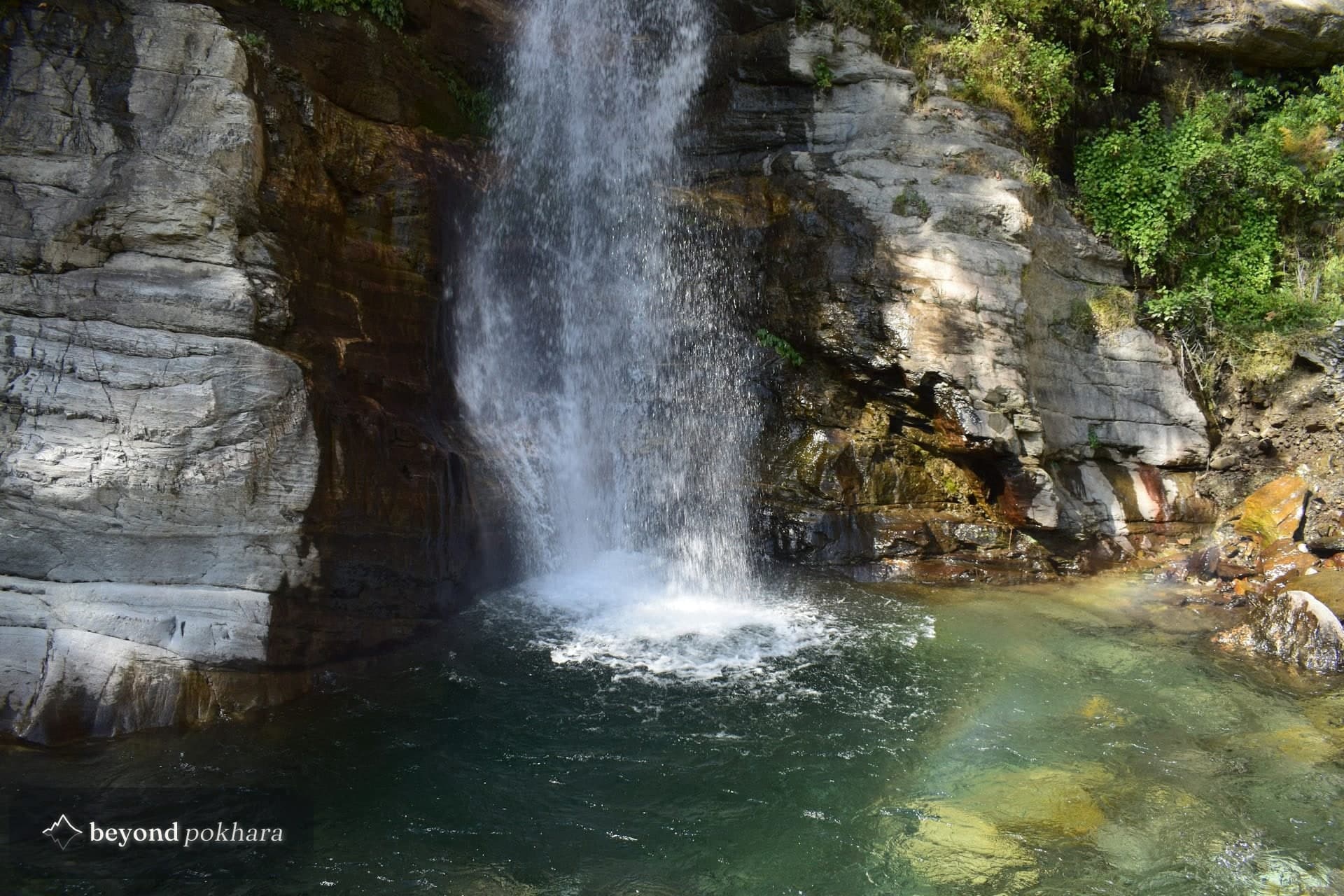
The main site is the Kudi waterfall (Kudi Chhahara) below Lwang Ghalel village, in Machhapuchhre Rural Municipality, about 22 km northeast of Pokhara. A local operator opened it for canyoning in 2014, and before Covid it drew around 3,000 people a year. The full falls at Kudi measure about 45 m and 75 m. Operators describe individual drops of roughly 12 m to 45 m, and the guides pick which pitches you abseil on the day, depending on the water.
The canyon sits at about 1,400 to 1,600 m, a little above Pokhara, in forest below the Annapurna foothills. Some booking sites call the trip "Lumre canyoning" after the area around the falls. It is the same canyon.
A newer site on the Mahabhir River at Durlung, about 7 km from Kushma in Parbat district, has been surveyed for routes of 110 m or more. It is two and a half hours from Pokhara and far less established, so for now it mostly suits people who are already in Kushma for the bungee jump.
What canyoning in Pokhara costs
The same canyon sells for anything from about 60 to 370 dollars, and the gap comes almost entirely from who is reselling it.
| Booking channel | Typical price per person | What it usually covers |
|---|---|---|
| Pokhara operator, group of 4 or more | 60 to 99 USD | Transport from Lakeside, gear, guides, entry fee |
| Pokhara operator, solo or pair | 110 to 125 USD | Same, with the jeep shared by fewer people |
| International booking platforms | 340 to 370 USD | Same day, resold with a platform margin |
| Overnight trip with a homestay | about 110 USD | Canyoning plus dinner, a night in the village and breakfast |
The platform listings are mostly the same local guides with a large markup. One of them adds about 35 dollars for meals on top. Local Nepali press put walk-in rates at the site at Rs 2,400 to 4,900 in 2020, but those figures don't include the drive from Pokhara or an English-speaking guide.
Before you pay anyone, check what the price includes. A fair canyoning quote from Pokhara should include the return drive, the wetsuit, harness, helmet and ropes, certified guides, and the local entry fee. Lunch, photos and tips are usually extra. Photos are worth a word in advance, because you won't be carrying a phone down a waterfall.
Best time of year
October and November are the best months for canyoning in Pokhara. The monsoon has just ended, so the canyon still carries plenty of water and the slides run fast, but the flow has settled and the days are dry and clear.
The season runs from September to May. September has the fullest water, and late monsoon rain can still close the canyon for a day or two. From December to February the flow drops and the pools get cold, so the wetsuit earns its keep and the slides are slower. March to May brings warmer air and the lowest water of the year, and by May some slides run thin.
June, July and August are monsoon months. Some operators run on dry spells, but heavy rain can push the water too high, and guides check the level and cancel when it is unsafe. If you are in Pokhara during the monsoon, keep the day flexible.
How the day runs from Lakeside
Pickup is from your hotel in Lakeside in the morning, followed by about an hour's drive to the canyon and a short walk in. At the top, the guides fit your wetsuit, harness and helmet and give a safety briefing on the rope and how to lean back into an abseil.
You then spend three to four hours working down the canyon. A guide talks you through each abseil before you go over the edge and stays on the rope with you. Between the falls you wade, slide down smooth rock chutes and jump into pools from heights you choose. You can walk around any jump you'd rather skip. Expect to be wet and cold by the end, even in warm months, because the water comes down from the hills.
Most groups are back in Lakeside by mid to late afternoon. Overnight trips stay in Lwang Ghalel, a hill village known for its tea gardens, and drive back the next morning.
Who can do it, and what to bring
No experience is needed, and you don't need to be very fit. A reasonable head for heights matters more than strength. You should be comfortable in water over your head, because some pools are deep, so tell the guide if you can't swim. Canyoning is not suitable if you are pregnant or have back or heart problems. Operators don't publish consistent age or weight limits, so we confirm them for your group when you book.
Bring a swimsuit to wear under the wetsuit, shoes that grip on wet rock and drain quickly, a towel and a full change of dry clothes, sunscreen, and water. Leave out anything loose, because loose clothing can catch on the ropes.
How canyoning compares with other Pokhara adventures
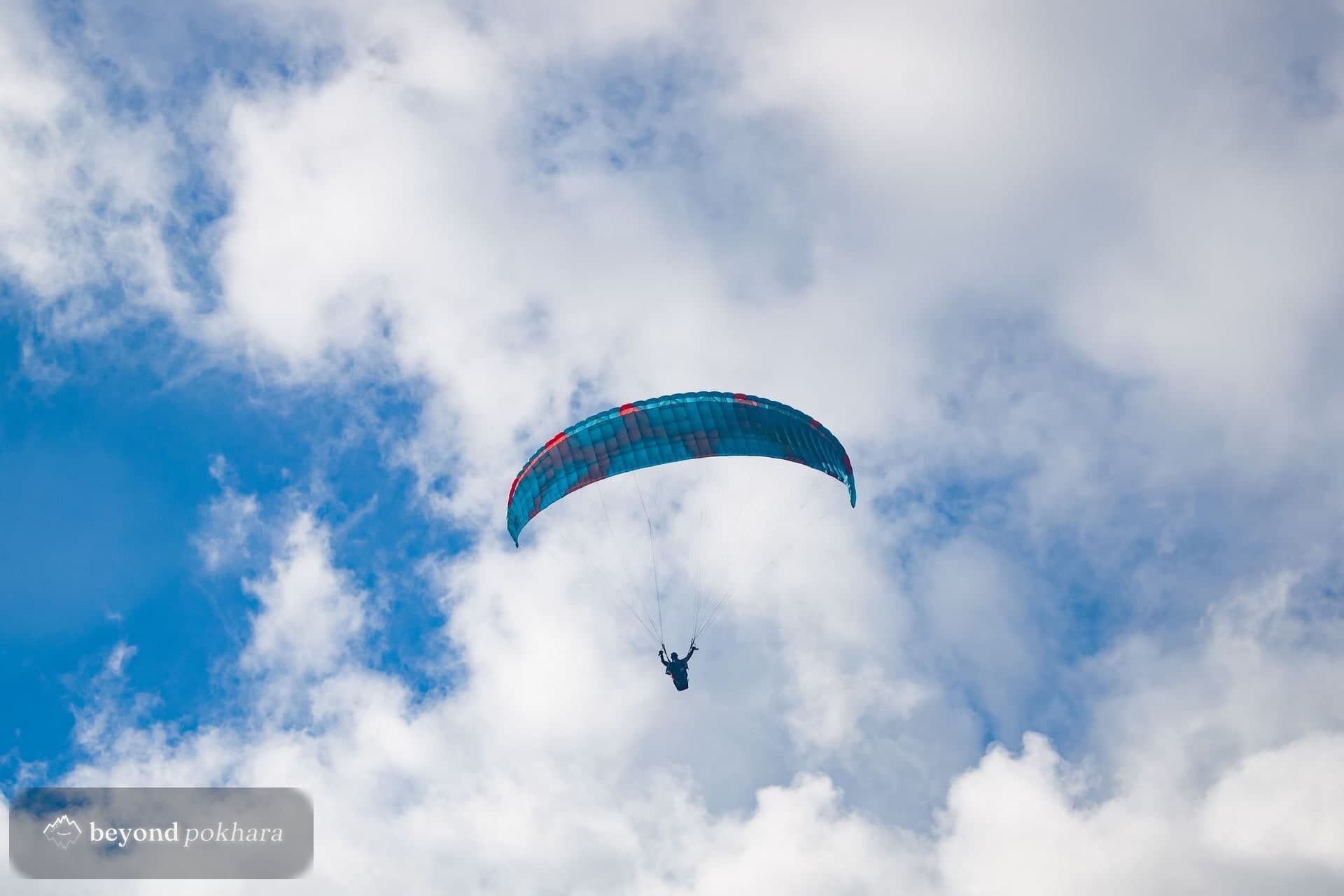
A paragliding flight from Sarangkot lasts 20 to 30 minutes and the pilot does all the work, while the zipline and the Kushma bungee are over in minutes. Canyoning takes most of a day and you do every drop yourself, so it suits people who want to be busy rather than carried. At our rates it is also the cheapest of the four.
If you are planning several, canyoning and paragliding fit on separate days, since both want the late morning, and the bungee pairs well with a drive west toward Beni or Mustang.
Doing it with a local operator
Our canyoning day near Pokhara starts at 59 US dollars per person, confirmed when you book. It covers hotel pickup and drop-off in Lakeside, the drive to the canyon, the wetsuit, harness and helmet, and certified canyoning guides, with three to four hours in the canyon. Meals, photos and tips are extra. Groups run from one to eight people, and the per-person rate is lowest for bigger groups.
In October and November, book a few days ahead. The rest of the season, a day or two is usually enough. You can plan canyoning around your Pokhara dates, add it to a longer trip, or browse our other Pokhara tours first.
FAQ
How much does canyoning in Pokhara cost?
A guided day with transport from Lakeside, gear and certified guides usually costs 60 to 125 US dollars per person when you book with a Pokhara operator, with the per-person rate falling as the group grows. The same trip resold on international booking sites often lists at 340 to 370 dollars. Our canyoning day starts at 59 dollars per person, confirmed when you book.
Where is canyoning done near Pokhara?
Most trips go to the Kudi waterfall below Lwang Ghalel village in Machhapuchhre Rural Municipality, about 22 km northeast of Pokhara and roughly an hour's drive from Lakeside. Canyoning has run there since 2014. A smaller site is being developed on the Mahabhir River near Kushma in Parbat district.
What is the best time of year for canyoning in Pokhara?
October and November are the best months, when the canyon still carries plenty of water from the monsoon but the flow has settled and the weather is dry. The season runs from September to May. In June, July and August heavy rain can push the water too high, and guides cancel when the flow is unsafe.
Do I need to know how to swim to go canyoning?
You don't need experience, and guides teach every abseil and jump before you do it. You should be comfortable in water over your head, because some pools are deep, so tell the guide if you can't swim. Canyoning is not suitable if you are pregnant or have back or heart problems.