The best time to visit Nepal is October and November. The monsoon has just scrubbed the air clean, the mountains show themselves nearly every morning, days are warm without being hot, and nothing is closed. March and April run a close second. Everything else in the year is a trade you can make deliberately, and some of those trades are good ones.
What follows is what each season actually gives you, including the parts the brochures leave out.
Autumn: October and November
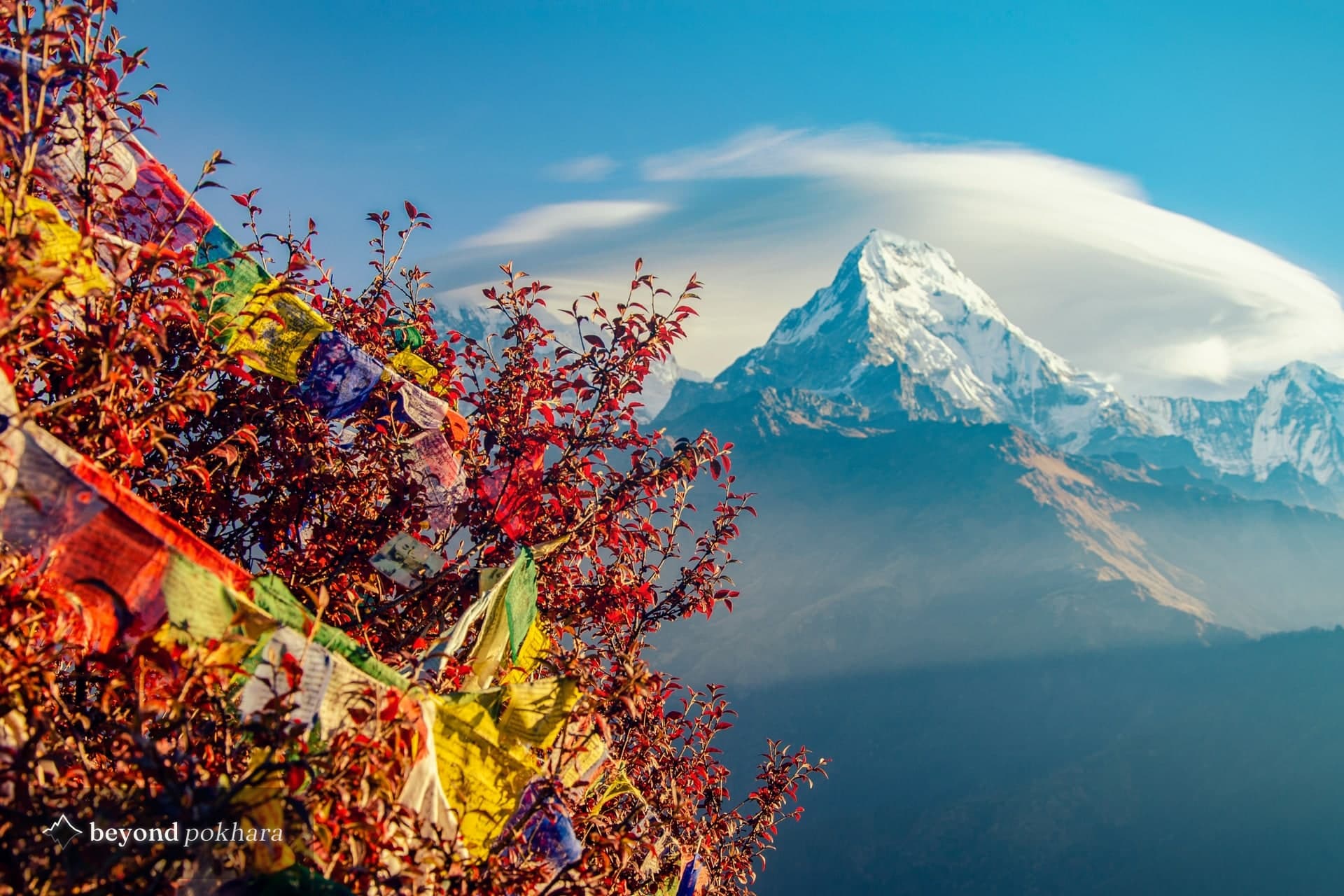
This is peak season and it earns the title. The monsoon withdraws through late September and takes the haze with it, leaving the clearest skies of the year. From Pokhara the Annapurnas and Machapuchare are visible from the lakeside on most mornings. Daytime temperatures in Kathmandu and Pokhara sit comfortably in the low twenties, nights are cool, and rain is infrequent.
Every trail is open, every road is passable, and every lodge is running. Chitwan is pleasant, the Kathmandu valley is at its best, and mountain flights actually fly. The Annapurna Base Camp trek and the routes around it are at their most reliable in these two months, and our season guide for Annapurna Base Camp goes into the detail.
The costs are crowds and price. Popular teahouses fill, flights and rooms cost more, and the busiest trails have queues at the viewpoints. Dashain and Tihar, Nepal's two largest festivals, also fall in this window. They are worth seeing, but businesses close, transport fills with people travelling home, and the dates shift each year with the lunar calendar, so check them before fixing an itinerary around them.
Spring: March, April and early May
The second window, and the one many people prefer. Temperatures climb, the days lengthen, and the rhododendron forests through the middle hills flower from March into April, which is genuinely worth planning around on routes like Poon Hill and Ghandruk.
The catch is clarity. Dust and agricultural burning build haze through spring, so mountain views are softer than in autumn and often gone entirely by late April. Higher up the air stays cleaner, so a trek that gains height escapes most of it. Crowds are heavy but slightly less so than October.
By late May the pre-monsoon pattern sets in: heat, humidity, afternoon thunderstorms, and the first serious haze. It is the least rewarding part of the season.
Monsoon: June to September
Most of Nepal's annual rain falls in these four months, usually in heavy bursts rather than all-day drizzle. Cloud covers the peaks most days, trails are muddy and leech-ridden below about 3,000 m, landslides close roads for hours or days, and domestic flights, Lukla especially, are delayed and cancelled often enough to wreck a fixed schedule. This is also the season of the floods and landslides that put Nepal in the international news, including the August 2026 flash flood.
None of which makes it a write-off, provided you choose the trip to suit it.
The rain-shadow regions are the answer. Upper Mustang, Dolpo and Manang sit north of the main Himalayan wall and receive under 300 mm of rain a year, so they stay dry and walkable while the south of the country is soaked. Mustang is at its best in July and August, which is exactly when the rest of the country is least walkable.
Elsewhere in the monsoon, the hills are an intense green, waterfalls run properly, Chitwan and Lumbini are workable if you accept the humidity, and the cultural sights of the Kathmandu valley do not much care about rain. Prices drop, and you will have places to yourself that are shoulder to shoulder in October. Build spare days into any monsoon itinerary, because road closures are a question of when rather than whether.
Winter: December, January and February
The season most people skip, and they are wrong to. The weather is stable and the air is clear, so mountain views through December are as good as autumn. Trails are empty and prices are soft.
The limit is altitude. Nights above 4,000 m are severe, and high passes such as Thorong La on the Annapurna Circuit close with snow. Some high teahouses shut for the season. But anything below about 3,500 m works well with proper layers: Poon Hill, Ghandruk, Australian Camp, and the day hikes around Pokhara are all comfortable, and the Pokhara valley itself rarely drops near freezing. Kathmandu mornings are cold and the buildings are not heated, which surprises people more than the outdoor temperature does.
Chitwan is at its best for wildlife in the late winter and early spring, when the grass has been cut and the animals are easier to see.
Choosing by what you want to do
- High trekking, above 4,000 m: October and November first, then late March and April. Avoid the monsoon and the deep winter.
- Lower trekking and hill walking: October to April all works. December and January are cold but clear and quiet.
- Mountain views from Pokhara or a mountain flight: late October to December.
- Rhododendron bloom: mid-March to mid-April in the middle hills.
- Mustang and the rain shadow: good from March to November, and the standout choice during the monsoon.
- Chitwan and wildlife: February to April, when visibility in the grassland is best. Avoid the peak of the summer heat before the rains.
- Rafting: October and November, when rivers are high from the monsoon but falling and clear.
- Paragliding and flying from Sarangkot: September to April, with the calmest clear mornings from October onwards.
- Fewest people and lowest prices: the monsoon, then winter.
The short version
If you can travel whenever you like, come in the second half of October and stay into November. If those months are impossible, take late March into April and accept softer views. If you are tied to the summer, go north into the rain shadow rather than fighting the weather in the south, and give the trip more days than the itinerary strictly needs.
Whatever month you land in, the seasonal risks are worth understanding before you book, and we have covered them in is Nepal safe to travel. Our tours and treks from Pokhara run year round, with the routes chosen to match the season rather than the season being ignored.
FAQ
What is the best time to visit Nepal?
October and November. The monsoon has washed the haze out of the air, the mountains are visible almost daily, days are warm and nights are cool, and every trail and road is open. March and April are the second window, warmer and hazier but carrying the rhododendron bloom through the middle hills. Those four months are also the busiest and the most expensive, which is the trade.
Is Nepal worth visiting in the monsoon?
For the right trip, yes. June to September brings rain, leeches, cloud on the peaks, landslides that close roads and frequent flight delays, so a high mountain trek is a poor bet. But the rain-shadow regions north of the Himalaya, Upper Mustang, Dolpo and Manang, receive under 300 mm a year and stay walkable. The hills are green, Chitwan and the culture in the Kathmandu valley work fine, and there are far fewer people about.
Can you trek in Nepal in winter?
Yes, at lower altitude. December to February gives some of the clearest, most stable weather of the year and the trails are quiet. Anything under about 3,500 m, such as Poon Hill, Ghandruk or the Pokhara day hikes, is comfortable with warm layers. High passes including Thorong La are another matter, since snow closes them and nights above 4,000 m are severe.
What is the worst time to visit Nepal?
July and August, if your trip depends on mountain views or a fixed schedule. They are the wettest months, cloud sits on the peaks most days, landslides close roads for days at a time and Lukla flights are cancelled often enough to break any itinerary. Late May is also awkward, with pre-monsoon haze, heat and building storms.
When is the best time to see the Himalayas clearly from Pokhara?
Late October through December. The air is at its cleanest just after the monsoon and stays clear through the cold months, so Machapuchare and the Annapurnas are visible from Pokhara on most mornings. Clarity falls away through spring as dust and agricultural haze build, and by late April the range is often invisible from the lake even on a dry day.