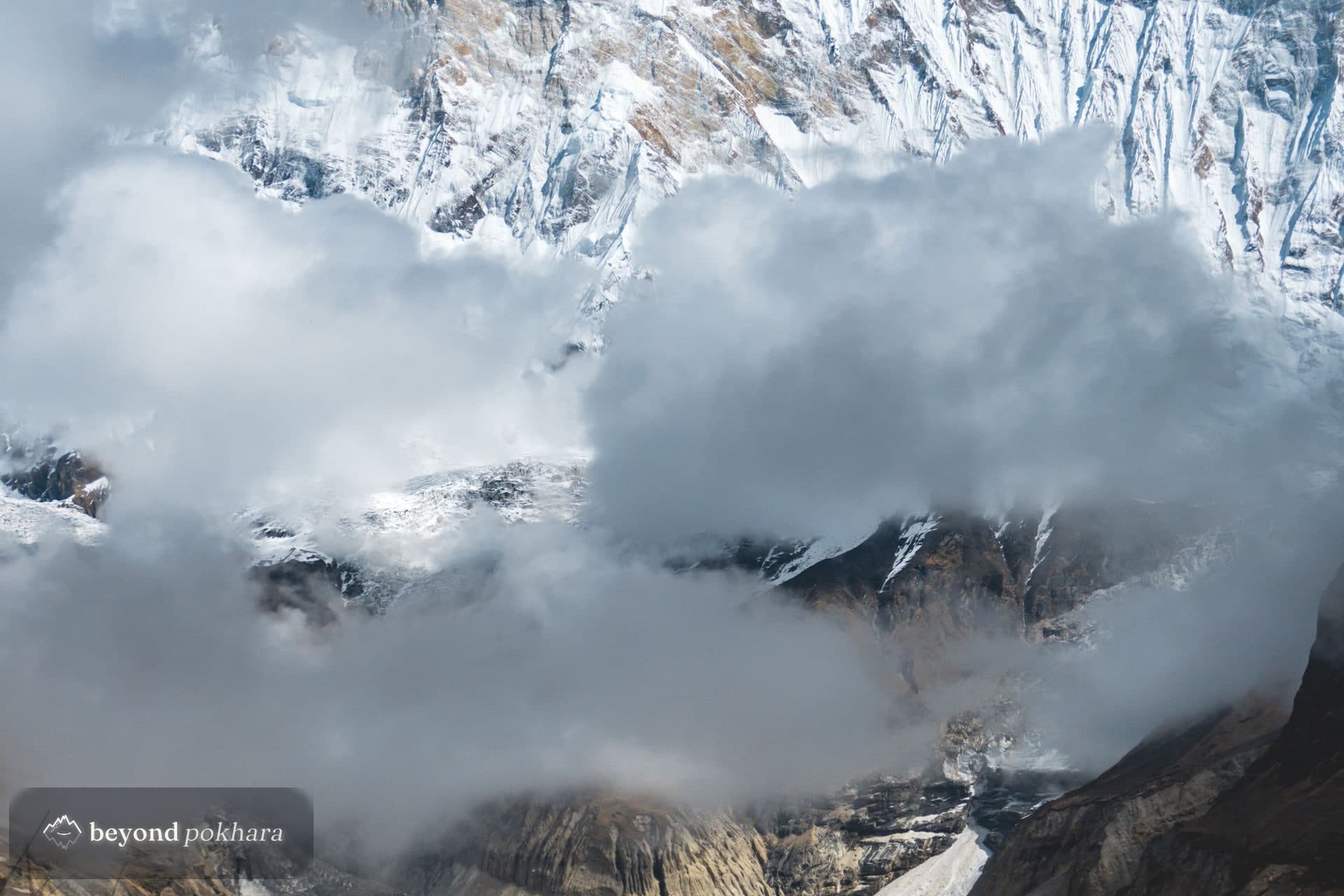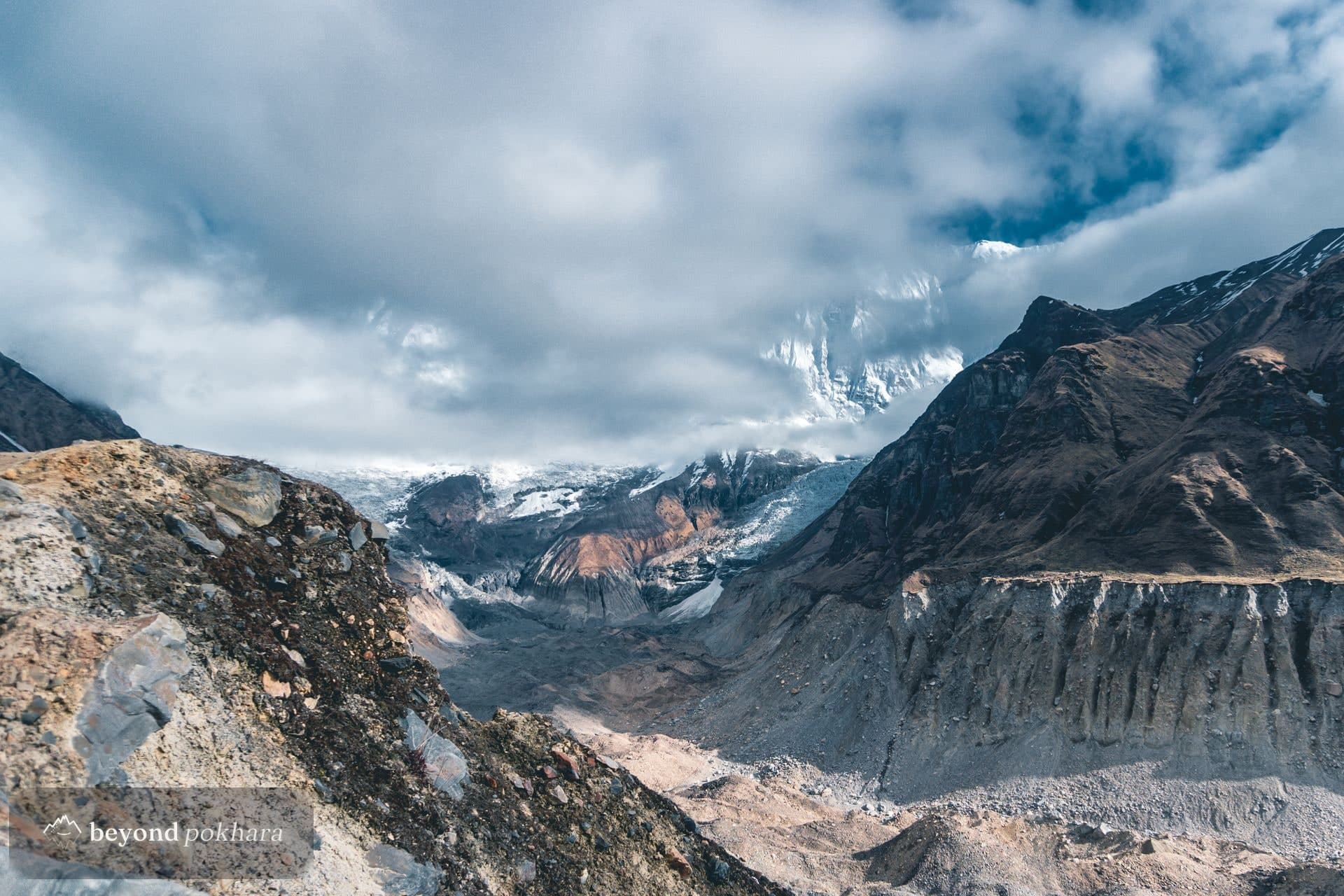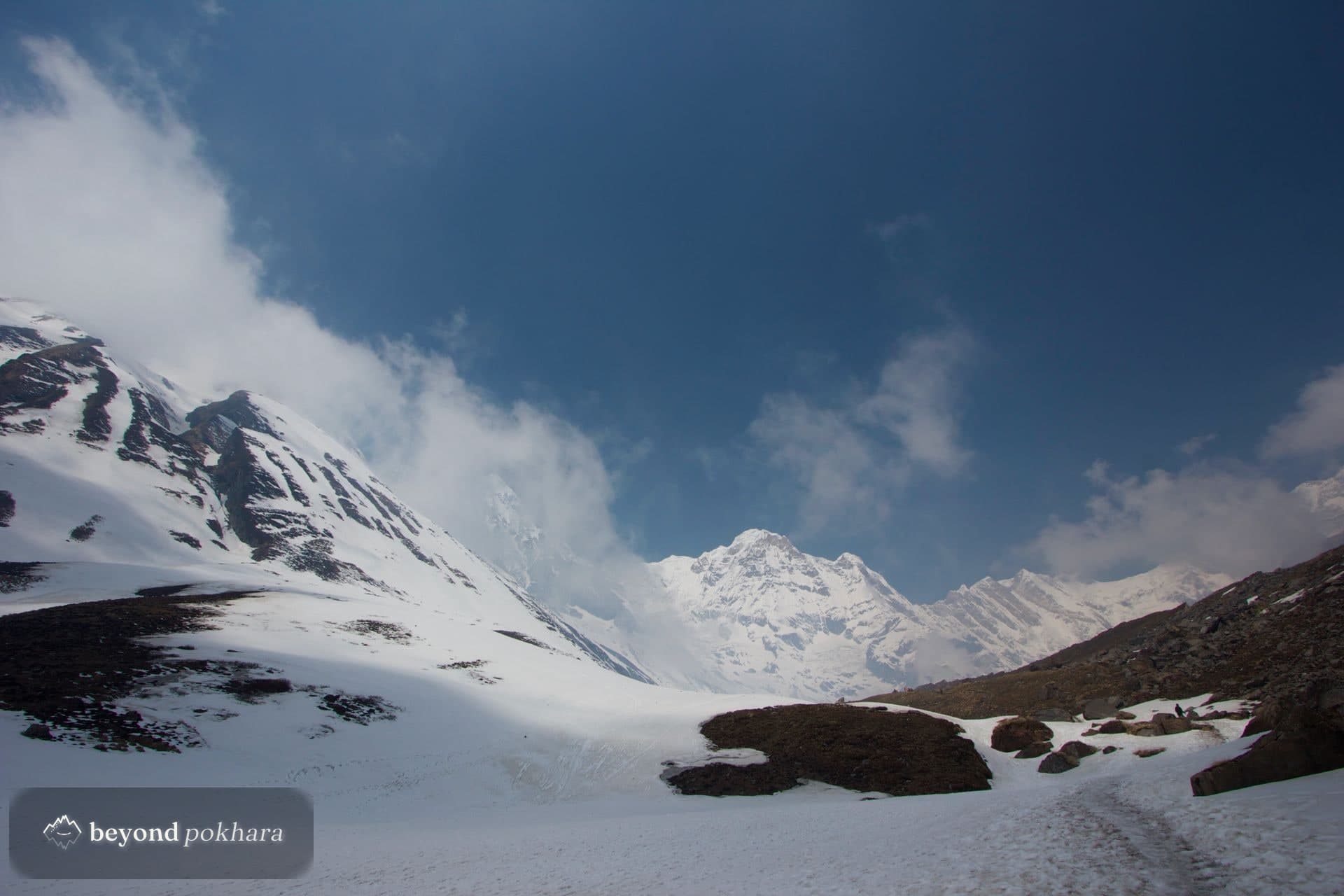
The best time for the Annapurna Base Camp trek is October to November, then March to April. Those are the two windows when the air over the Sanctuary stays clear for days at a time and the trail up the gorge is dry underfoot. You can walk it from Pokhara in any month, and people do, but the season decides whether you stand at 4,130 metres looking at the whole ring of peaks or at the inside of a cloud.
This is a season guide rather than a route guide. If you want the walking days, the distances, and where you sleep each night, the Annapurna Base Camp trek itinerary covers that separately.
The two clear windows
Autumn runs from late September to the end of November. The monsoon has just pulled the dust out of the air, so the views are as sharp as they get all year, and the trail has dried out. October is the single most reliable month on this trek in Nepal and everyone knows it, which is the catch.
Spring runs from March into early May. It is warmer, the rhododendron forest between Ghorepani and Chhomrong comes into flower, and the lower trail is noticeably quieter than in October. The trade is haze. By late April moisture is building again and the afternoon skyline softens, so the mountains are usually clearest before ten in the morning.
Between those two, autumn wins on views and spring wins on comfort. Both work well. The other months need more thought.
October and November on the trail
October gives the best odds of a clean dawn at Base Camp. Days on the lower trail are warm enough for a shirt, nights at Deurali and above are near freezing, and the mountain stays out for hours rather than minutes. Annapurna Base Camp has a handful of lodges and can hold something like 150 to 200 trekkers on a peak night, so in mid October beds go by late afternoon. A guide who knows the lodge owners phones ahead the day before, which is most of how this actually gets solved on the trail.
Dashain falls across October in 2026, with the main tika day on 21 October, and Tihar follows in the second week of November. Villages along the trail celebrate, some family-run teahouses close for a few days, and Nepali trekkers add to the numbers. None of that ruins the trek. It does mean the first half of November is our usual recommendation for anyone who wants October weather without October traffic. Nights get colder as the month goes on, the air stays dry and settled, and by late November the crowds have gone home.
March to May in the Annapurna Sanctuary
March starts cold and clears as it goes. There is still old snow above 3,000 metres early in the month, and Base Camp averages about 4C by day against minus 8C at night. By the last week the trail is usually clear and the forest is starting to turn.
April is the strongest spring month. Average highs at Base Camp reach around 8C with lows near minus 4C, the snow has retreated, and the laligurans, Nepal's rhododendron, is in bloom through the forest below Chhomrong. Walking up through red flowering trees at 2,000 metres and reaching a glacier basin four days later is a strange and good combination that autumn does not offer.
May is warm and getting humid. Highs near 14C at the top and lows around freezing make it the mildest month up there, but pre-monsoon build-up brings afternoon cloud and the occasional thunderstorm. Start early, be at the day's lodge by mid afternoon, and May still works. After the third week we generally steer people elsewhere.
Winter: December to February
Winter on this trek is cold and quiet, and whether it happens at all depends on the snow. Skies in December and January are often the crispest of the year, and the lower villages are pleasant in the sun. Above Deurali it turns into a different walk. Snow lies on the path, ice forms where the gorge is in shadow, and nights at Base Camp can hit minus 15C. Daylight is short, so the margin for a slow day is thin.
The real constraint is snow load. The narrow section between the Himalaya lodges, Hinku Cave, and Deurali sits under steep ground and is a known avalanche path, and the risk peaks in January and February after heavy falls. People have died there. We run Annapurna Base Camp in winter only with a guide who has checked the current state of that stretch, and if the conditions are wrong we move the dates or swap to a lower trek such as Ghandruk or Australian Camp. That caveat is why December to February sits below the two main windows here.
Monsoon: June to mid September
June, July, and August are the months to avoid for this trek. Cloud sits on the Annapurnas most afternoons, the stone steps above Jhinu are slick, leeches are active in the forest below 2,500 metres, and the road from Pokhara to the trailhead can be blocked by a landslide with little warning. Teahouses stay open and the hills are green, but you are paying for a view you may not see.
If your dates are stuck in the monsoon, go north instead of up. Upper Mustang and the upper Kali Gandaki sit in the Annapurna rain shadow and stay dry while the south side floods, which is why the Pokhara to Mustang road trip is our standard answer in July. Wet season roads are also a good argument for vehicle hire in Pokhara with a driver who knows which sections wash out, rather than a public bus and a long wait.
September turns quickly. The first half is still wet, and by the last ten days the rain has usually stopped, the trail firms up, and the air has that first post-monsoon clarity before the October crowds arrive. Late September is underrated for exactly that reason.
Temperatures you will actually feel
A single figure for Base Camp is not much use, because the trek covers close to 3,000 metres of vertical. A day that starts at 25C in the river valley at Jhinu can end below freezing at Deurali. In the two main seasons the pattern holds: daytime walking is mild to warm, and the cold arrives at dawn and after sunset at the top two lodges.
- Base Camp by day: around 4C in March, 8C in April, 14C in May, similar in October and cooler through November.
- Base Camp at night: near minus 8C in March, minus 4C in April, close to freezing in May and October, colder in November and down to minus 15C in deep winter.
- Lower trail (Chhomrong, Jhinu, Bamboo): mild year round, warm and humid in May and through the monsoon.
Teahouses hand out blankets and the dining rooms have a stove, so a warm sleeping bag and one proper down layer solve most of it in season.
What does not change with the season
Permits and rules are flat all year. The Annapurna Conservation Area Permit is NPR 3,000, about 22 US dollars per person, and the TIMS card is NPR 2,000, about 15 US dollars. Since April 2023 a licensed guide is required for trekking in the Annapurna Conservation Area, so a guide is part of any trip whichever month you pick. Costs move a little with season through lodging and transport rather than fees, and the Annapurna Base Camp trek cost guide breaks that down.
The trek itself keeps its shape too. Seven days from Pokhara on the standard version, five to six for fit walkers driving in higher, nine or ten with Poon Hill on the front. Our Annapurna Base Camp trek runs on that seven-day shape and we set the pace to whoever is walking. If the Sanctuary is out of season for your dates, the other treks from Pokhara sit lower and stay open longer.
How to pick your dates
If clear mountains matter more to you than a quiet lodge, take the second half of October or the first half of November. If you would rather have warmer nights, flowers on the way up, and room on the trail, late March or April is the better pick. Late September gets you autumn air before the season fills, at the cost of a small chance the monsoon is running late that year. Winter suits people who are comfortable in cold and flexible about dates. The monsoon belongs to Mustang.
Tell us your window and we will tell you honestly whether it works, or which month next to it works better.
FAQ
What is the best time for the Annapurna Base Camp trek?
October and November first, then March and April. Those months give the driest trail and the most reliable mountain views from the Sanctuary. October is the clearest and the busiest; April is warmer, greener, and quieter on the lower trail.
Can you trek to Annapurna Base Camp in winter?
Yes, in December and into February, but conditions change above 3,000 m. Snow can cover the trail, nights at Base Camp drop toward minus 15C, and the narrow section between the Himalaya lodges, Hinku Cave, and Deurali is a known avalanche path after heavy snowfall. We only run it in winter with a guide who has checked the current conditions, and we will move the dates if the snow says so.
Is the monsoon a bad time to trek to Annapurna Base Camp?
June to mid September is the hardest stretch. Cloud sits on the peaks most afternoons, the forest below 2,500 m has leeches, the stone steps are slick, and the road to the trailhead can be cut by landslides. If your dates are fixed in the monsoon, Upper Mustang sits in the rain shadow and stays dry.
How cold is Annapurna Base Camp at night?
Around minus 8C on an average March night and minus 4C in April at the top, colder in December and January when it can reach minus 15C. Days are mild, often above freezing and pleasant in the sun, so the layers matter most at dawn and after dark.
Which is better for Annapurna Base Camp, autumn or spring?
Autumn for clarity, spring for warmth and flowers. October and November give the sharpest views after the monsoon has washed the air. Late March and April bring rhododendron in bloom through the forest below Chhomrong, warmer nights, and fewer trekkers on the way in.