The best short treks from Pokhara run from an easy overnight in a foothill village to a week-long ridge under Annapurna, and every one of them starts and ends at the lake. That is what makes Pokhara the trekking base of Nepal: you can drive to a trailhead in an hour or two, walk into real mountain country, and be back for dinner by the water. This guide lays out nine of them, shortest first, with the real days, altitudes, and difficulty so you can pick the one that fits the time and fitness you have.
Most people come to Pokhara with less than a week and want the mountains without a two-week commitment. The walks below deliver exactly that. If you already know you want the famous sunrise, jump to the Poon Hill trek guide, or browse the full range of treks from Pokhara to compare them side by side.
What counts as a short trek
A short trek here means two to seven days on the trail, teahouse or community lodge each night, no technical climbing, and a trailhead within a few hours of Pokhara by road. All of them sit in the Annapurna Conservation Area, so all of them need an ACAP permit, and most need a TIMS card too. None require you to camp or carry your own food. You walk, a guide leads, and the lodges feed and sleep you.
The easy overnights: two days
If you have a single spare day, you can still sleep in the mountains.
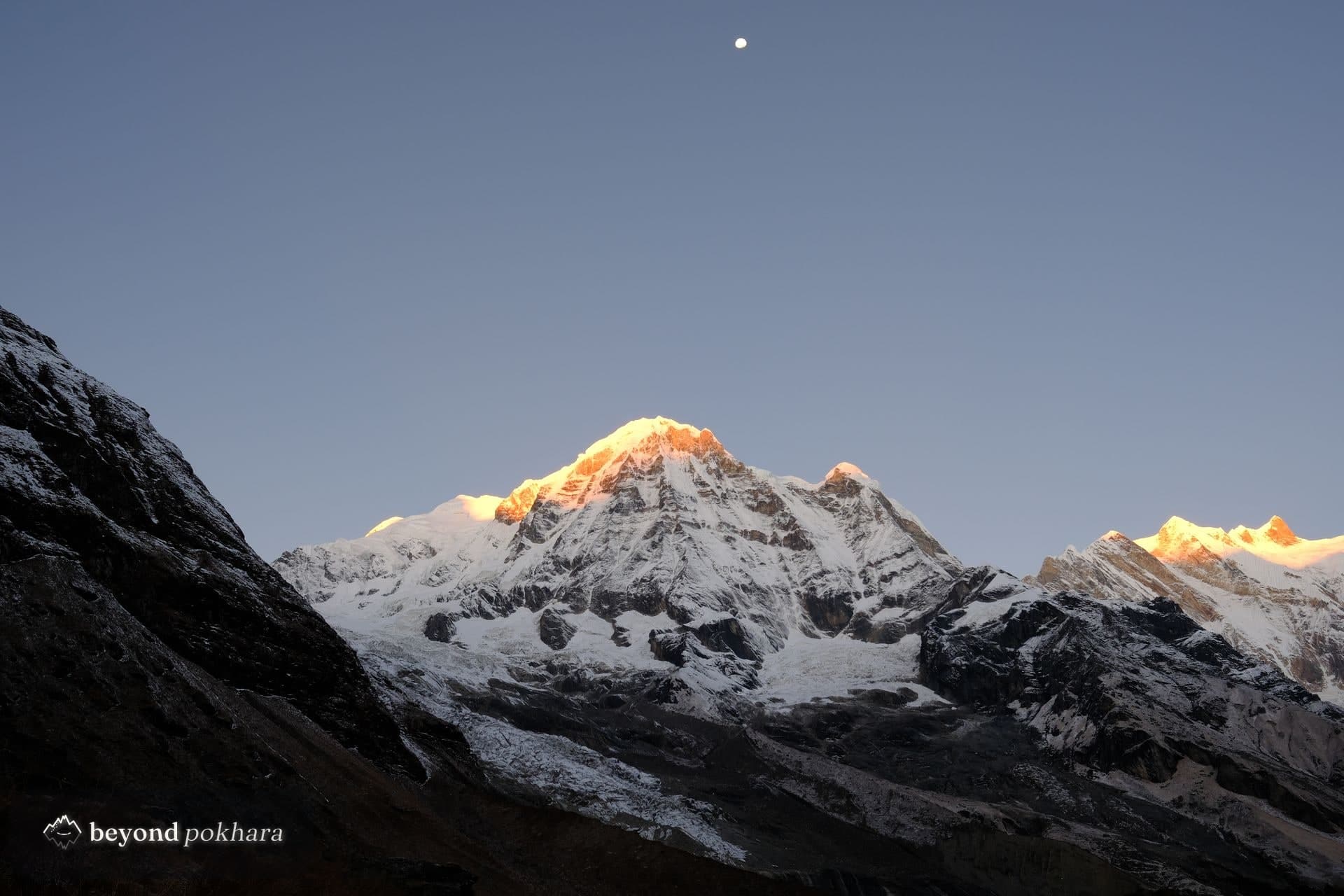
Ghandruk Village Trek, 2 days, up to 2,012 m. A drive to the trailhead and a climb up stone steps to Ghandruk, the grand Gurung village that looks straight into Annapurna South. You get the afternoon light on the range, a night in the village, sunrise the next morning, and time in its Gurung museum before walking out. From around 179 US dollars. It is the gentlest window into the high country.
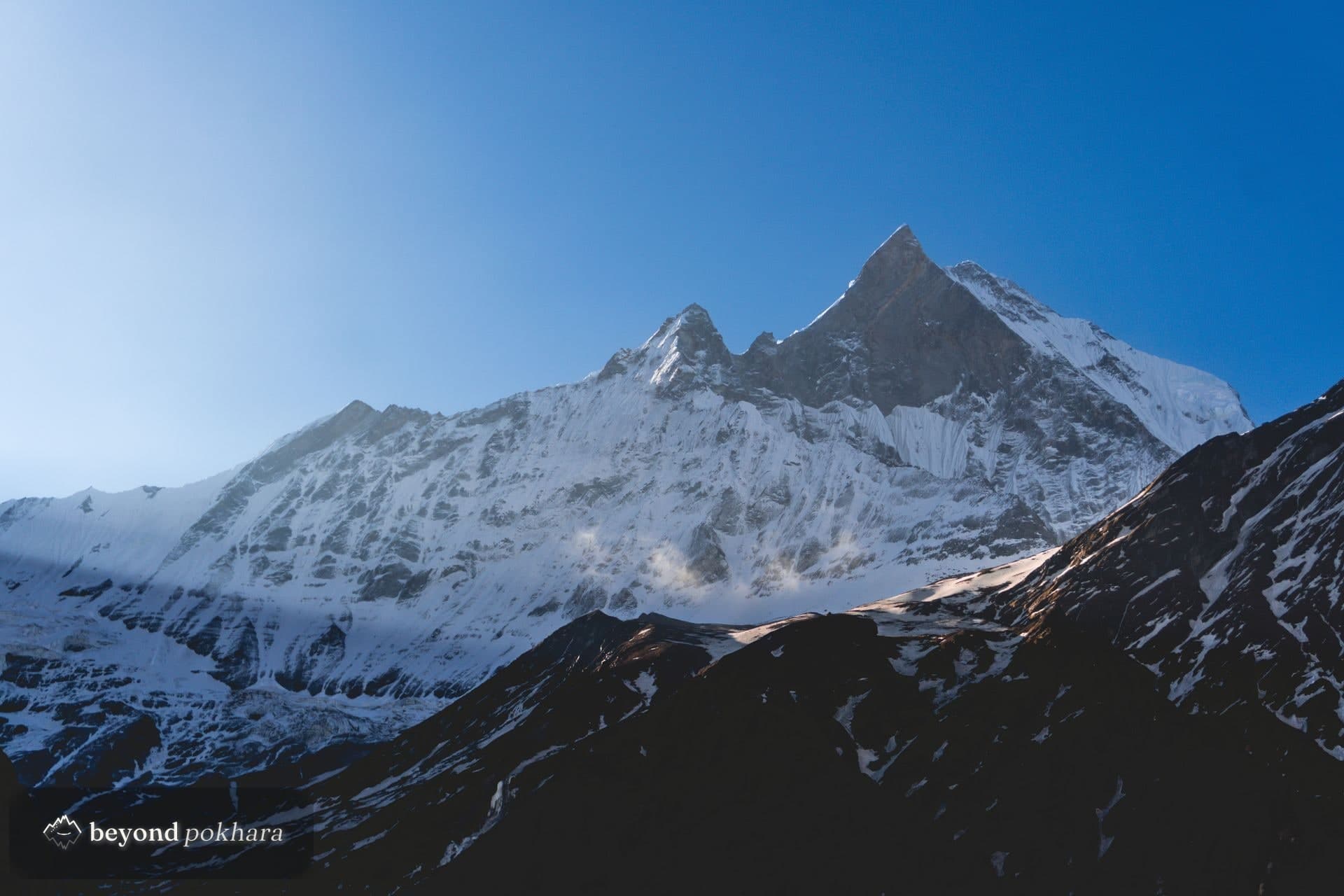
Australian Camp and Dhampus Trek, 2 days, up to 2,060 m. An hour's drive to Kande, then a short forest climb to the meadow at Australian Camp for sunset on Machapuchare and Annapurna South. The next day traverses to the village of Dhampus and down to the road. From around 149 US dollars, and the shortest, easiest trek on this list.
Both are walkable most of the year and clearest from October through April, which makes them a good first night out for families or anyone easing into altitude.
The classic four-day walks
Ghorepani Poon Hill Trek, 4 days, up to 3,210 m. The most famous short trek in Nepal. You climb the long Ulleri stone stairway to the ridge village of Ghorepani, wake before dawn for the Poon Hill viewpoint, and watch the sun come up over Dhaulagiri and the Annapurnas, then walk out through the large Gurung village of Ghandruk. Moderate, from around 299 US dollars. The rhododendron forest on the climb is at its best in spring. The full route is in the Poon Hill trek guide.
Panchase Trek, 4 days, up to 2,500 m. A quieter forested ridge right above Pokhara, climbing through dense rhododendron to the Panchase summit and its temple for a 360-degree panorama of the range. Moderate, from around 299 US dollars. It stays lower than Poon Hill, so it suits shoulder seasons and walkers who want mountains without the altitude.
Kapuche Glacier Lake Trek, 4 days, up to 2,546 m. A different sort of short trek, heading to the Sikles side of the Annapurnas to reach the lowest glacial lake in Nepal, a turquoise pool under a sheer wall of ice and rock. Moderate, from around 249 US dollars. Two of the four days are drives to and from the trailhead, so the walking is concentrated. It stays off the main trekking circuit, so you see far fewer walkers.
The ridge treks: five to seven days
For a fuller week with real height, these climb higher and stay quieter than the Poon Hill trail.
Mardi Himal Trek, 5 days, up to 4,200 m. A high, narrow ridge that climbs out of the forest to an open viewpoint directly beneath the fishtail wall of Machapuchare. Moderate, from around 299 US dollars, and the highest of the short treks. It sits just off the main trail, so the crowds thin as you climb. The Mardi Himal trek guide covers the ridge day by day.
Mohare Danda Trek, 6 days, up to 3,300 m. A community-run circuit through Gurung and Magar villages to the Mohare ridge, with the same Dhaulagiri and Annapurna sunrise Poon Hill is famous for, but a fraction of the walkers. Moderate, from around 499 US dollars. The lodges are village-owned, so the money stays local.
Khopra Danda Trek, 7 days, up to 3,660 m. A high ridge above the crowds, looking straight into Annapurna South and Dhaulagiri, with an optional dawn walk to the sacred Khayer Lake at 4,660 m. Moderate, from around 499 US dollars. It is the quietest of the week-long options and rewards walkers who want the height of a bigger trek without the traffic.
The big one: Annapurna Base Camp, 7 days
If you want the full Sanctuary and have a week, the Annapurna Base Camp trek is the signature foothill walk from Pokhara. It climbs the Modi Khola gorge to a glacial amphitheatre at 4,130 m, ringed almost the whole way round by peaks over seven thousand metres, and comes back past the hot springs at Jhinu. It is challenging rather than technical, from around 499 US dollars, and the one short trek that puts you inside the mountains rather than looking across at them. The day-by-day route is in the Annapurna Base Camp trek itinerary guide.
How to choose
Work backward from your time and your legs.
- One spare night: Ghandruk or Australian Camp. Easy, low, a village and a sunrise.
- Three or four days, first trek: Poon Hill for the classic sunrise, or Panchase for a quieter forest ridge.
- Something different: Kapuche for a glacial lake off the main circuit.
- A full week, want height and quiet: Mardi Himal, Mohare Danda, or Khopra Danda.
- The full Sanctuary: Annapurna Base Camp.
Fitness matters more than experience on all of them. There is no climbing, but the days are long and the stone steps are hard on the knees. We set the pace to you and can shorten or stretch any of these routes.
Permits and best time
Every trek here needs an ACAP permit (NPR 3,000 for foreign trekkers) for the Annapurna Conservation Area, and most need a TIMS card (NPR 2,000) that logs who is on the trail. A guided trip arranges both before you leave Pokhara, so there is nothing to queue for.
The best months are October to November and March to April, when the skies are clear and the trail is dry. Spring adds the rhododendron flower along the lower forests. The lower overnight walks hold up most of the year, clearest from October to April. The monsoon, June to August, brings rain, leeches, and cloud over the peaks, so autumn or spring is the wiser call for a first trip.
How to get there
All of these begin in Pokhara. We drive you from the lake to the trailhead, handle the permits, and collect you at the road on the last day. If you are still working out how to reach Pokhara or want a vehicle for the wider trip, our vehicle hire in Pokhara covers airport transfers and point-to-point drives with a local driver. Pokhara itself is worth a day or two at either end, so most people build the lake, the sunrise at Sarangkot, and one of these treks into a single trip across this part of Nepal.
FAQ
What is the shortest trek from Pokhara?
An overnight to Australian Camp and Dhampus, or to Ghandruk village, both two days with one night in a teahouse. You drive out of Pokhara in the morning, walk up for the afternoon and sunset on the range, sleep in a mountain village, and walk out the next day. They are the easiest way to taste the Annapurna foothills without committing a week.
Which short trek from Pokhara has the best mountain views?
For the money, the Poon Hill sunrise over Dhaulagiri and the Annapurnas is the classic, reached in four days. For a closer, higher wall of mountains, the Mardi Himal ridge climbs to 4,200 m under Machapuchare in five days. Both start and end in Pokhara.
Do I need a guide and permits for short treks from Pokhara?
You need an ACAP permit (NPR 3,000) for any trek in the Annapurna Conservation Area, and a TIMS card (NPR 2,000) on most routes. A guided trip arranges both before you set off. As of recent rules, solo trekking on these trails is restricted, so most walkers go with a licensed guide anyway.
When is the best time for short treks from Pokhara?
October to November and March to April, when the skies are clearest and the trail is dry. The lower, shorter walks like Ghandruk and Australian Camp are walkable most of the year, clearest from October to April. The monsoon from June to August brings rain, leeches, and cloud that hides the peaks.